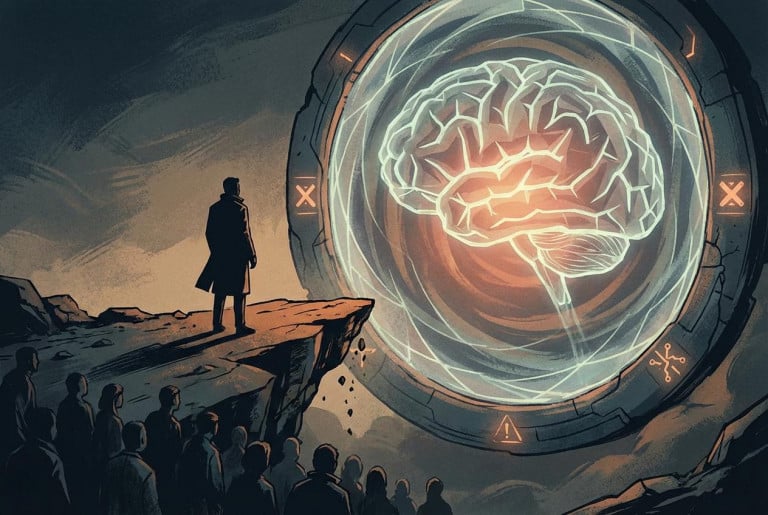
There’s an interesting pattern in digital marketing: as soon as a tool becomes mainstream, it stops being a competitive advantage.
In 2026, this is especially visible with AI, data, and advertising. The market is maturing, and many of the old “growth hacks” are losing their effectiveness. This guide has one goal: to help business owners understand which trends genuinely impact revenue and which ones simply sound impressive in presentations.
Table of Contents
Why 2026 Is Changing the Rules of the Game
During 2024 and 2025, many companies operated under a simple assumption: “More traffic equals more sales.”
In 2026, that logic is breaking down for three key reasons.
AI Has Become the Standard
Generating content, ad creatives, campaign ideas, and marketing hypotheses is no longer a rare capability. Today, the winners are not the companies that “use AI,” but those that have built reliable processes and quality-control systems around it.
Major industry reports increasingly point to GenAI as a force that is reshaping marketing at a structural level, influencing everything from creative production and search experiences to interactions with machine-driven audiences.
Businesses that want to stay competitive are already integrating specialized AI tools for entrepreneurs into their daily workflows rather than treating AI as an experimental technology.
Data Is Becoming More Expensive
And not just financially.
Regulations, browsers, and technology platforms continue moving toward privacy-focused ecosystems. Even when specific initiatives are delayed or adjusted, the overall privacy-first trend remains firmly in place.
Content and Trust Are Becoming Strategic Assets
As audiences grow increasingly tired of advertising, brand voice, expertise, and consistent messaging are becoming more valuable.
Companies that invest in authority and trust are building advantages that competitors cannot easily replicate through paid advertising alone.
Trend 1. Agentic AI and Task-Oriented Marketing Automation
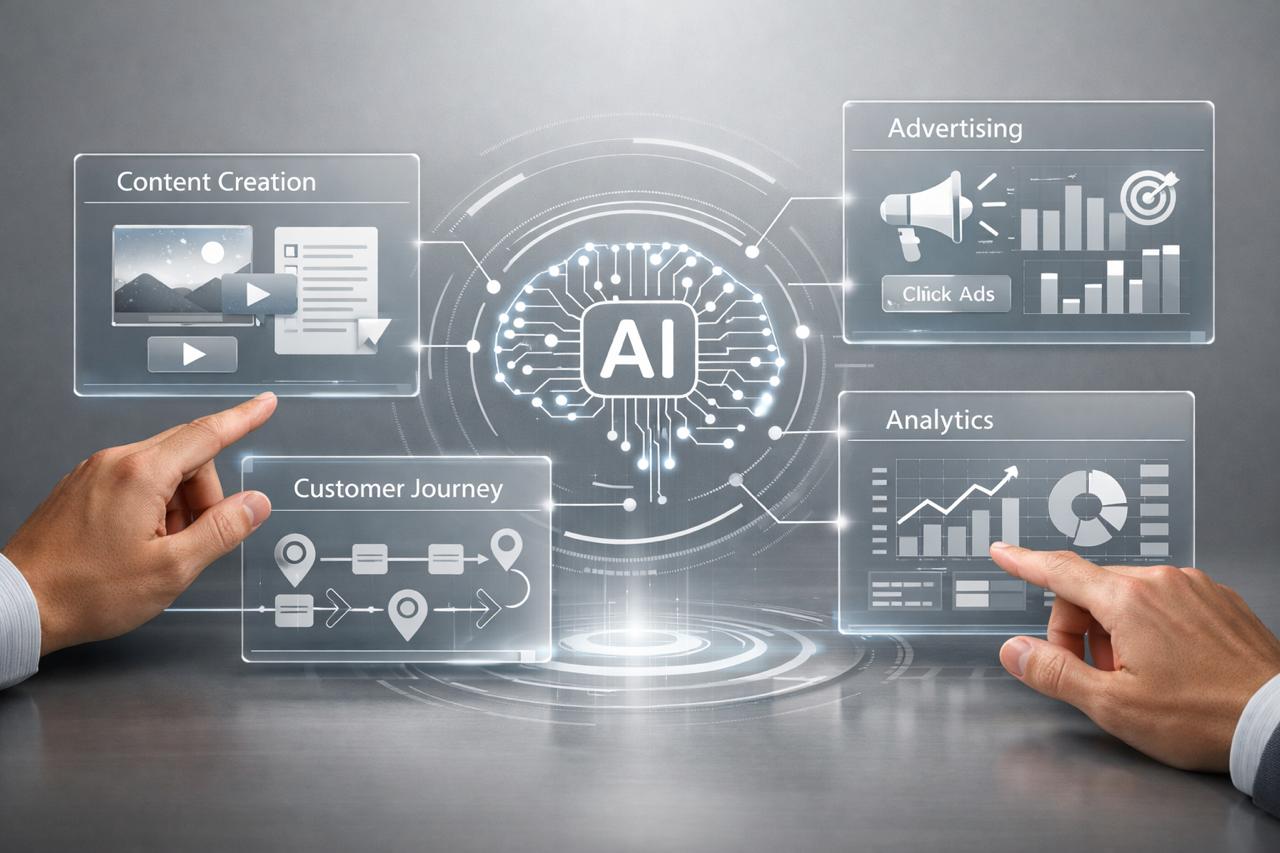
In 2026, the focus is shifting from traditional generative AI to AI agents—systems capable of handling entire segments of marketing work independently.
These agents can assist with:
- content preparation;
- initial audience segmentation;
- insight discovery;
- email draft creation;
- customer support responses;
- lead qualification.
The trend is already visible across major CRM ecosystems, where platforms are launching AI-powered agents for content creation, customer support, and prospecting activities.
What This Means for Business Owners
Faster Experimentation
Teams can test more creatives, offers, and landing page concepts without significantly increasing resources.
Lower Cost of Failure
Ideas can be validated before investing heavily in large-scale campaigns.
More Time for High-Value Activities
Marketing teams spend less time on repetitive execution and more time on strategy, product development, and sales.
Where Implementations Usually Fail
Despite the benefits, businesses often encounter two recurring problems:
- AI produces convincing content that contains factual inaccuracies;
- companies automate processes without defining KPIs or business objectives.
Expert Tip: The biggest losses rarely come from AI itself. They come from the illusion of control. If your funnel does not measure lead quality, AI will simply accelerate the flow of low-quality leads. Define what a qualified lead looks like first. Establish metrics. Only then should automation be introduced.
Trend 2. First-Party Data Becomes the New Currency
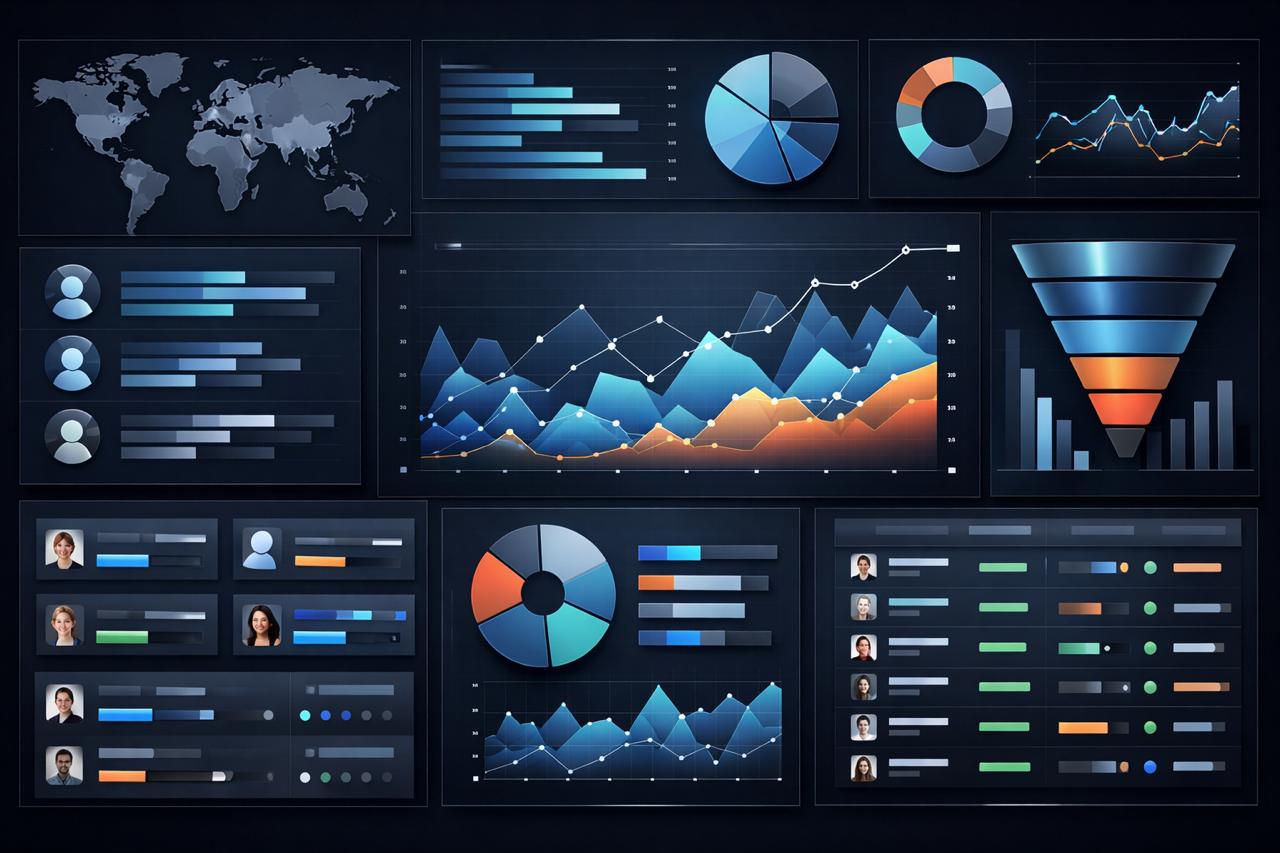
The term first-party data may sound technical, but its business meaning is straightforward:
It refers to the customer information your company owns directly.
This includes:
- inquiries and form submissions;
- purchase history;
- customer support interactions;
- email subscriptions;
- website behavior;
- communication records.
Why This Trend Is Accelerating
Privacy Changes Continue
Browser and platform updates related to cookies and privacy are still evolving, even when deadlines shift or implementation approaches change.
Major technology companies continue revising their privacy strategies while giving users greater control over their data.
Platforms Are Becoming More Closed
Advertising platforms increasingly keep analytics inside their own ecosystems.
Businesses, however, need independent access to their customer data to make informed decisions.
The Practical Takeaway for 2026
Successful companies are building marketing systems around:
- CRM platforms;
- website events;
- user consent management;
- reliable attribution models.
This is not about compliance alone.
It is about maintaining control over marketing performance.
Mini Table: Which Data Actually Creates Business Value?
| Data Type | Source | Business Value |
|---|---|---|
| Contact information + inquiry reason | Forms, chats, phone calls | Demand segmentation |
| Purchase history | CRM, POS systems | LTV optimization and repeat sales |
| Website events | Analytics platforms | Identifying conversion bottlenecks |
| Interaction history | Email and messaging platforms | Stronger retention strategies |
Trend 3. Personalization That Sells Without Feeling Creepy
In 2026, personalization means much more than inserting a customer’s first name into an email.
Modern personalization includes:
- dynamic offers for specific segments;
- repurchase workflows;
- content tailored to funnel stages;
- intelligent recommendations;
- next-step guidance.
However, there is a fine line between relevance and intrusion.
Over-personalization can easily create the feeling that customers are being watched.
That is why successful brands focus on:
- transparency about why offers are shown;
- allowing users to control communication frequency;
- maximizing usefulness rather than aggressiveness.
Industry research continues to highlight the growing demand for more human-centered marketing experiences, even as AI capabilities expand.
Businesses that combine automation with authenticity are seeing stronger long-term results.
This is also one of the reasons why brand authenticity is becoming a major competitive advantage rather than simply a branding concept.
Trend 4. Social Media Is Becoming Less Predictable, While Community and Trust Gain Value
One of the most frustrating realities for businesses in 2026 is that organic reach on social media is no longer as reliable as it once was, while paid promotion continues to become more expensive.
Many analysts describe this phenomenon as the gradual “decay” of traditional social media mechanics.
At the same time, the assets that are hardest to manufacture artificially are becoming more valuable:
- genuine expertise;
- a recognizable communication style;
- a loyal community around the product;
- partnerships with niche creators and industry influencers.
This may sound like traditional branding, but in 2026 branding directly affects cost per lead and conversion rates more than many advertising optimizations.
Businesses that invest in strong social media marketing strategies are increasingly focused on building relationships rather than chasing short-term reach metrics.
A recognizable brand voice also becomes a measurable business asset because customers are more likely to engage with brands that sound consistent and trustworthy across every channel.
Trend 5. Content Is Becoming Sales Infrastructure

In 2026, content operates on two distinct levels.
Content for Humans
This content:
- explains products and services;
- addresses objections;
- reduces uncertainty;
- helps customers make purchasing decisions.
Content for Machines
This content helps:
- search engines;
- AI-powered search experiences;
- recommendation systems;
- generative answer engines;
understand facts, pricing, services, and product offerings correctly.
This is where many businesses make costly mistakes.
They create attractive articles and landing pages but ignore:
- content structure;
- schema markup;
- clear information architecture;
- verifiable claims;
- well-organized data.
As a result, AI-driven search results and aggregators may display incomplete or inaccurate information about the business.
Expert Tip: When content is created exclusively for SEO, it often becomes toxic to business growth. Traffic may increase, but sales do not. In 2026, content should start with customer questions, buying intent, and proof. Optimization should be added afterward as a second layer.
Businesses that regularly perform A/B testing on creatives and content assets are finding it easier to identify which messages actually drive conversions instead of simply attracting clicks.
What Business Owners Should Actually Do: A Practical Action Map
To turn 2026 marketing trends into revenue, businesses do not necessarily need new channels.
They need stronger foundations.
Trend → Management Action → Short-Term Impact
| 2026 Trend | Management Action | What Changes Within 30–60 Days |
|---|---|---|
| Agentic AI | Introduce AI into creative production and testing workflows | More hypotheses tested with the same resources |
| First-party data | Connect marketing activities to CRM and website events | Better visibility into lead quality |
| Personalization | Build 2–3 customer journeys (new lead, abandoned inquiry, repeat purchase) | Higher conversion rates without increasing ad spend |
| Community and trust | Launch expert content and strategic partnerships | Lower acquisition costs and stronger credibility |
| Content as infrastructure | Rebuild key pages around customer questions | Better conversion rates and clearer value propositions |
How to Create a Logo That Fits This Topic Without Looking Like Everyone Else
Marketing in 2026 is too visual to ignore brand identity.
The bad news: a generic logo generated from the first available template can reduce trust even when the product itself is excellent.
The good news: creating effective visual identity is much faster when it starts with meaning rather than aesthetics.
A practical approach looks like this:
- Define your positioning.
- Clarify your audience.
- Decide on the desired tone of communication.
- Select symbols, typography, and colors that support that positioning.
The tone might be:
- professional;
- innovative;
- friendly;
- premium;
- technology-focused.
Only after these decisions are made should visual elements be selected.
When businesses need a strong starting point without lengthy design discussions, AI-powered tools can help accelerate the process.
With Turbologo, for example, users enter their company name and industry, receive multiple design concepts, customize typography, symbols, and colors, and then download a complete set of brand assets for websites and social media.
For companies launching a new product, service, or business direction, this creates an efficient way to create a logo using AI without extensive design briefs or endless revision cycles.
The Biggest Marketing Risks in 2026
AI Without Oversight
Content becomes generic.
Creatives start looking identical.
Brand differentiation disappears.
Errors multiply.
Data That Exists but Is Not Used
Many companies have CRM systems but still make decisions based on intuition instead of evidence.
Personalization Without Ethics
Aggressive personalization can reduce trust and damage customer relationships.
Overreliance on Advertising
When CPL increases, the entire acquisition model becomes vulnerable.
Content Without Structure
Search engines and AI systems may misunderstand products, services, and offers, leading to weaker visibility and lower conversions.
Frequently Asked Questions
What are the most important digital marketing trends for small businesses in 2026?
Three priorities stand out:
- AI as a productivity accelerator;
- first-party data as the foundation of marketing control;
- content as a long-term trust-building asset.
Even businesses with limited budgets can achieve meaningful results by focusing on these areas.
What matters more in 2026: advertising or content?
Content builds trust and lowers customer acquisition costs.
Advertising provides scale.
Without strong content, advertising becomes more expensive and converts less effectively.
The strongest businesses combine both rather than treating them as competing strategies.
Should businesses prepare for the “death of cookies”?
Privacy regulations and cookie-related changes continue to evolve, and major technology platforms regularly adjust their approaches.
The safest long-term strategy is to strengthen first-party data collection, customer relationships, and independent analytics capabilities rather than relying on a single tracking mechanism.
How can you tell whether AI marketing is generating profit rather than noise?
The signal is straightforward.
You should see:
- more validated marketing hypotheses;
- faster testing cycles;
- a higher percentage of leads converting into customers.
If the number of inquiries increases but sales remain unchanged, AI is likely amplifying noise rather than improving business outcomes.
Digital marketing in 2026 is no longer about discovering secret growth hacks.
It is about building systems.
The companies that win will not necessarily have the largest advertising budgets or the newest AI tools. They will be the businesses that combine automation, data ownership, trust, and structured content into a repeatable growth engine.