
Over the past few years, one pattern has repeated itself again and again: the account is active, content is being published, ad campaigns are occasionally turned on, yet the flow of leads depends mostly on luck. This article is built as a practical framework — so social media stops being “content for the sake of content” and becomes a controllable demand-generation channel with a clear funnel, KPIs, and a 90-day execution plan.
Table of Contents
What Changed in 2026 — and Why “Just Posting” No Longer Works
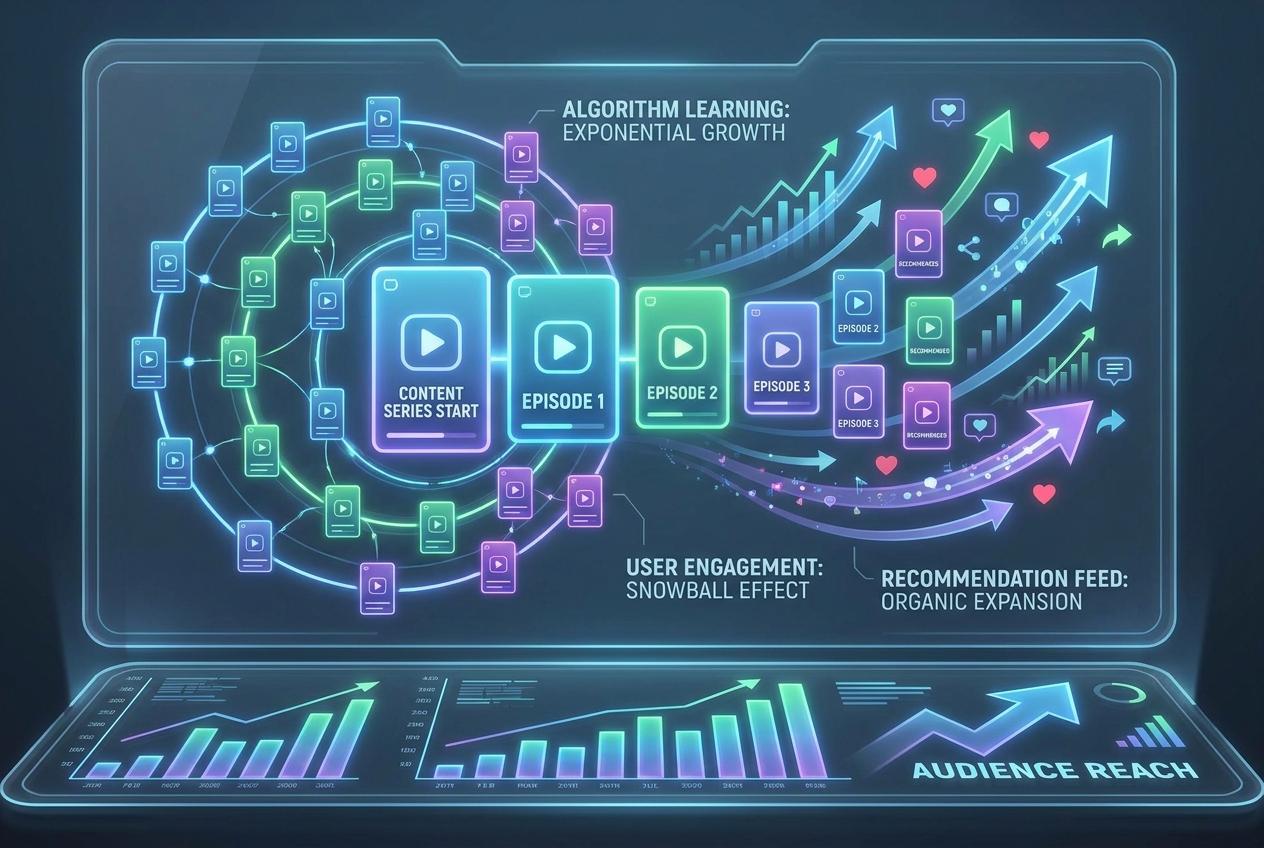
1) Algorithms Promote Interest, Not Followers
Feeds are increasingly built around recommendations, where content is shown to people based on interest, even without a subscription. In Hootsuite’s 2026 reports, this shift is described as a move toward interest-led discovery and the snowballing effect, where recurring themes and content series outperform isolated posts.
The practical takeaway for businesses is simple: one “good post” is weaker than a series of 6–10 pieces of content that develop the same narrative and teach the algorithm who should see the content.
2) Social Media Is Becoming a Search Engine
Searches like “where to buy,” “which one to choose,” “how much does it cost,” or “best specialist near me” are increasingly solved directly inside social platforms. Sprout Social specifically describes social media search as a standalone discipline: captions, on-screen text, profile structure, and comment replies now function like platform-native SEO.
This changes the requirements for content: concise value and precise wording often matter more than aesthetics.
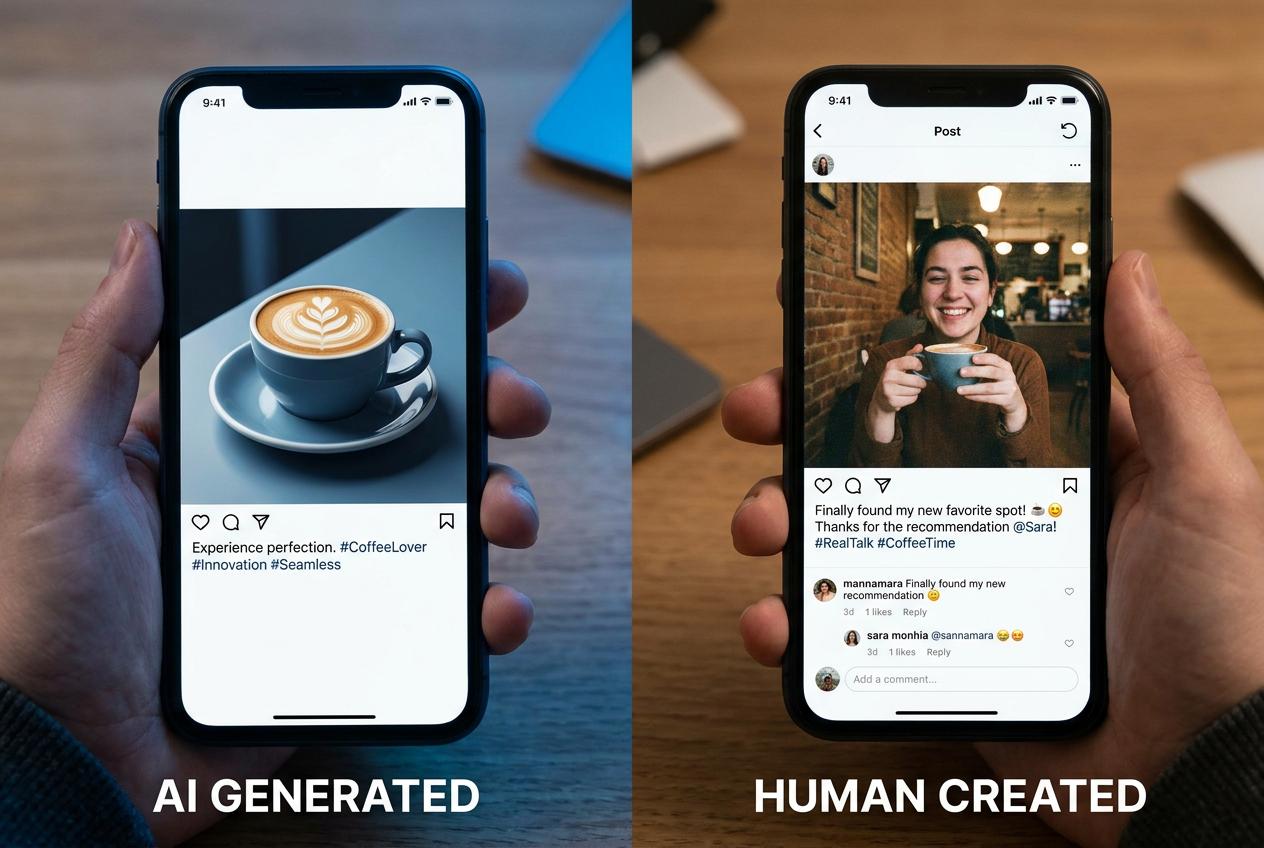
3) AI Accelerates Production but Creates a Trust Crisis
Teams actively use AI tools, but the market is experiencing fatigue from “sterile” content. Even major platforms and media companies are discussing the issue of AI slop and declining trust in overly polished materials.
In 2026, the winning formula is: speed (AI helps) + editing (human experience and real-world detail). In its 2026 content strategy report, Sprout Social emphasizes teams struggling with unpredictable algorithm changes and the growing need for deeper audience insights.
Expert tip: If your content plan is built around formats (“three reels, five stories, one post”), the strategy is already losing. Formats are packaging. The foundation is themes and micro-scenarios that move a person through the funnel: from “understand” to “compare” and then to “submit a lead.”
The 2026 SMM Strategy Framework: Blocks That Hold the Channel Together
Block 1. One Main Goal and One “North Star”
The problem for business owners is not a lack of content. The problem is that content has no single measure of success. You need a North Star metric — one metric that reflects the value of the channel. For lead generation, this is usually “qualified leads,” “calls booked,” “paid inquiries,” or less commonly, “attributed revenue.”
All other metrics still matter, but they become supporting indicators: reach, retention, clicks, saves, and direct messages.
Block 2. Choosing Platforms Using the “2+1” Rule
In practice, the best-performing model in 2026 is: two core platforms where consistency is maintained, and one experimental platform used to test hypotheses and new formats. This reduces team burnout and prevents resources from being spread too thin.
It is also important to account for dark social: some leads come through forwarded messages and private sharing, making them difficult to measure directly. That is why the measurement system should include a “How did you hear about us?” question and unified UTM tagging.
Block 3. A Content Funnel Built Around Three Streams
Instead of chaotic posting, it is more effective to maintain three content streams:
- Trust: proof of expertise and quality (case studies, testimonials, before/after examples, mistake breakdowns).
- Demand: content targeting search-style queries and pain points (“how to choose,” “how much does it cost,” “what should you consider”).
- Conversion: offers, lead magnets, bookings, lead forms, packages, and objection handling.
This is how a content taxonomy is built, followed by an editorial calendar for the next 4–6 weeks.
2026 Formats That Drive Results — Not Just “Activity”

Short-Form Video Without Expensive Production
Short-form video remains the primary attention format, but in 2026, practical videos perform best: breakdowns, demonstrations, mini-tutorials, one idea per clip. Overly polished visuals can sometimes reduce trust because of the growth of AI-generated content.
UGC and Proof Instead of Promises
UGC is not just “customer-generated content.” It is any form of proof that is difficult to fake: screenshots of conversations (without personal data), audio testimonials, photos of results, short interviews, or case-study breakdowns explaining what was done and what outcome was achieved.
In its 2026 report, Emplifi notes that teams are scaling growth through AI, influencers, and UGC because these formats build trust more efficiently than “perfect advertising.”
Social Commerce and Service as Part of Marketing
For many industries, social media is becoming a storefront, a shop, and customer support all at once. This is not a trend — it is economics: faster replies lead to faster sales. Russian-language trend reviews also emphasize the growth of social commerce and “customer service within social media” as a source of revenue.
How to Combine Organic Reach and Advertising Without Burning Budget
The most common mistake is turning on ads before the content has proven that it resonates with the audience. In 2026, content should be used as a creative testing ground: first, organic distribution shows which topics and presentations generate retention and saves, and then those winning pieces are amplified with paid performance campaigns.
This approach aligns with the logic found in major trend reports and enterprise-level marketing practices.
A healthy system looks like this:
- organic content publishes a series around one topic (snowballing effect)
- ads amplify the best-performing pieces to cold audiences
- retargeting warms up viewers who watched, saved, or clicked
- a lead form or booking flow converts them into inquiries
Social Media KPIs: What Business Owners Should Monitor
Below is a table that helps teams stop arguing about “engagement” and start measuring what actually moves prospects toward a deal.
| Funnel Stage | What to Measure | What Counts as Healthy | What to Do if Performance Drops |
|---|---|---|---|
| Attention | reach, watch time, retention | stable growth across content series | change the topic, strengthen the hook, simplify the message |
| Interest | saves, meaningful comments, DMs | growing save rate | add practical examples, checklists, before/after comparisons |
| Transition | clicks, profile visits, pricing page views | 20–30% click growth after a series | rewrite the offer, remove vague wording |
| Lead | lead forms, bookings, messages | improving lead conversion rate | simplify the path, focus on one primary CTA |
| Sales | deals, average order value, LTV | CRM integration | improve tracking, record sources, train the sales manager |
Expert tip: Followers are a secondary metric. In weak channel economics, follower counts often grow while lead costs become more expensive. It is better to have fewer followers but a higher percentage of “your people” — those who save content, ask questions, and return regularly.
The 90-Day Implementation Plan: Turning Strategy Into Routine
Weeks 1–2: Foundation
Audit existing platforms, define the unique value proposition, collect frequently asked customer questions, and set up tracking (UTMs, a unified lead form, minimal CRM attribution). At this stage, a content taxonomy is also built: 10–15 demand-focused topics plus 10 trust-building topics.
Weeks 3–6: Producing Series and Running Tests
Launch 2–3 content series. The key principle is simple: one series, one idea, one outcome for the audience. At the same time, test basic advertising on the strongest-performing pieces and launch retargeting campaigns.
Weeks 7–12: Scaling and Automation
Double down on topics that the algorithm has started amplifying, add UGC mechanics, and connect to the creator economy (collaborations with creators or micro-influencers, if relevant to the niche).
Emplifi notes that most marketers see productivity gains from AI, but not everyone achieves “significant” impact — which is why automation should come after a reliable process has already been built.
Visual Identity for Social Media: Why a Logo Affects Conversion
Social media strategy often breaks down because of a small detail: content is being published, but the profile looks like a “temporary page,” and trust never fully forms. In 2026, when feeds are overloaded, recognition matters faster than most people realize: the avatar, name readability, unified color palette, and typography discipline.
For a fast launch, it helps to use a tool that creates the foundation of a brand identity quickly: the Turbologo logo generator. It is important to treat this as a draft version of the system: choose a symbol, test readability at avatar size, lock in 2–3 colors and one font.
These elements are then transferred into covers, previews, cards, and templates so the content becomes recognizable even without displaying the logo in every frame.
Frequently Asked Questions
How Do You Choose Social Platforms When Resources Are Limited?
The choice should be based on demand: where the audience searches for the service, asks questions, and compares options. Then apply the “2+1” test: two main platforms for consistency, one for experimentation. Priority should go to networks where it is easiest to convert users into leads through messages or lead forms.
What Matters More in 2026: Organic Reach or Advertising?
Organic content builds trust and validates topics. Advertising accelerates what has already proven effective. Without organic content, advertising often turns into buying traffic without warming up the audience first. That is an expensive path.
How Can You Use AI Without Producing Generic Content?
AI should be used as an assistant: drafts, headline variations, transcriptions, editing prompts. The final version still needs texture: details from client work, real objections, concrete numbers, and natural wording.
The trends of 2026 and public discussions around AI slop show that audiences quickly recognize “faceless” content.
Which KPIs Should a Business Owner Review Weekly?
One North Star metric (leads/calls/payments) plus 3–5 supporting indicators: video retention, saves, clicks, cost per lead, and the percentage of leads coming from retargeting. That is enough to manage the channel without getting lost in “marketing fog.”
In 2026, an SMM strategy wins not because it “keeps up with trends,” but because it builds an operating system: thematic content series (snowballing), content optimized for social search, proof through UGC, measurement through a North Star metric, and a clear 90-day execution cycle.
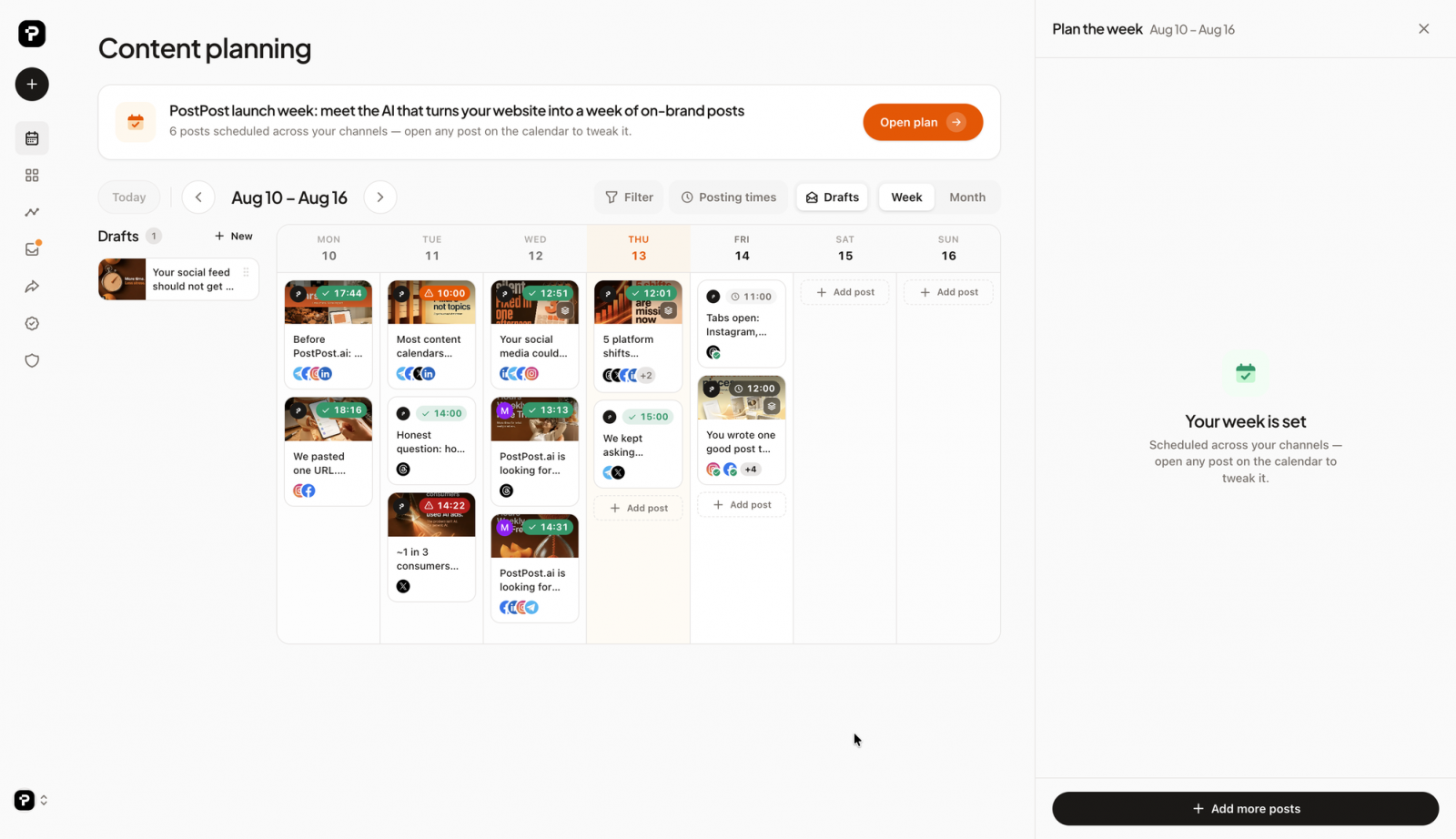
Most of that is an execution problem rather than a planning one: the same brand rules, applied every week, across every channel. That is the job PostPost.ai was built for – it keeps your brand context in one place and turns it into scheduled posts across eight networks.
Recommended sources for validating trends and mechanics include the 2026 reports from Hootsuite, Sprout Social, and Emplifi.