
Over the past few years, a quiet revolution has happened in how we talk about search: users increasingly expect a ready-made answer, not a list of links. Businesses, meanwhile, often continue to live by the old model: “the main thing is to be in Google.” This guide solves one specific task: to show which search engines really shape demand in 2026, and how to adapt marketing to the new mechanics of search, including AI search.
Table of Contents
Why a “search engine” in 2026 is not just Google
Traditional link-based search has not disappeared. But an “interpretation layer” has grown on top of it — AI answers, suggestions, aggregators, and vertical searches. Even when a user starts in a classic search engine, some queries end without a click to a website: the answer is shown immediately. This changes the economics of content: websites that provide structure, facts, and clear entities win.
Below is a top-10 list from a business perspective: major classic search engines by market share plus the platforms that are noticeably pulling search behavior toward themselves in 2026, especially AI search.
Expert tip: A costly mistake is planning SEO as a “set of articles for keywords” without thinking about how AI reads a page differently. For AI, structure, clear entities, and answers to questions matter more than beautiful 12,000-character text.
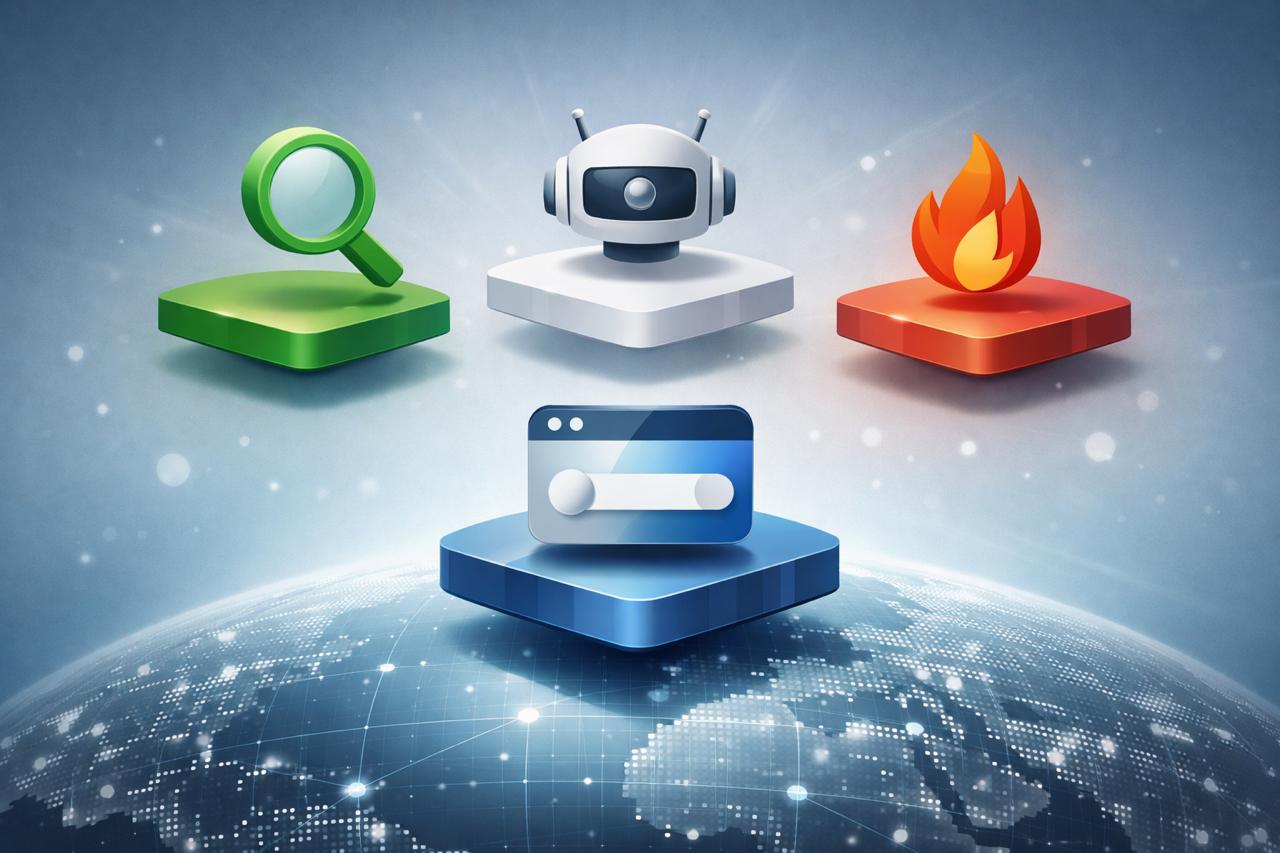
Top 10 Search Engines in the World in 2026
1) Google
Google maintains the dominant share of global search according to open market trackers. According to StatCounter, Google remains the leader of the global market.
For business, this means that the basic rules of SEO and brand presence in Google still provide the widest reach.
2) Microsoft Bing
Bing remains firmly in second place and benefits from integrations into the Microsoft ecosystem and the growth of AI-powered search scenarios. Market shares are convenient to check through StatCounter and similar summaries based on it.
3) Yandex
Yandex remains a strong player in several regions and ecosystem-based scenarios. Globally, it is behind Google and Bing, but for businesses with a Russian-speaking audience, it is a key channel.
4) Yahoo
Yahoo largely relies on partner results, but as an entry point into search, it still appears in market-share statistics.
5) DuckDuckGo
DuckDuckGo is important not because of its market share, but because of its audience — users who consciously choose privacy and often respond well to clear, no-fluff pages. In summary market-share reports, it usually appears among the notable “others” after the top four.
6) Baidu
Baidu is China’s main search engine. If a business enters the Chinese market or works with Chinese partners, Baidu cannot be ignored. In global statistics, it appears as a separate notable player.
7) Brave Search
Brave is growing as a private search engine and as part of a browser ecosystem. For most businesses, it is not the main source of traffic, but it is a good indicator of the trend: the request for privacy is becoming a real choice, not just a slogan.
8) Naver
Naver is critical for South Korea. It is not in the global top three by market share, but as a regional leader, it affects the strategy of companies selling in Korea or building partnerships in Asia. In 2026, regional “giants” like this are still stronger in their own markets than global niche search engines.
9) ChatGPT Search
Since 2024, OpenAI has been developing a search mode inside ChatGPT, turning “search” into a dialogue with answers and links. This changes user habits: a question is asked the same way it would be asked to a live consultant. For small businesses, this is closely connected with how they use ChatGPT in small business marketing and how they prepare content for early-stage customer questions.
10) Perplexity
Perplexity has established itself as an AI search engine focused on quick answers with sources. According to public summaries, the service has tens of millions of active users and a very high query frequency. For businesses, this is a signal that “search through AI” is already a mass scenario, not a toy for enthusiasts.
Short table: who dominates by market share, and who changes behavior
Market shares depend on the period and measurement methodology, but the general order for classic search engines is stable: Google is first by a large margin, Bing is second, followed by the long tail.
| Class | Examples | What this gives business |
|---|---|---|
| Classic search with huge reach | Google, Bing | Maximum demand, predictable SEO principles |
| Regional ecosystems | Yandex, Baidu, Naver | Access to “your” market, with its own ranking rules and formats |
| Private/niche search | DuckDuckGo, Brave | An audience with different behavior: it values clarity and facts |
| AI search | ChatGPT Search, Perplexity | Pages that are easy to “read and retell” win |
What matters to a business owner: not the list, but the scenarios
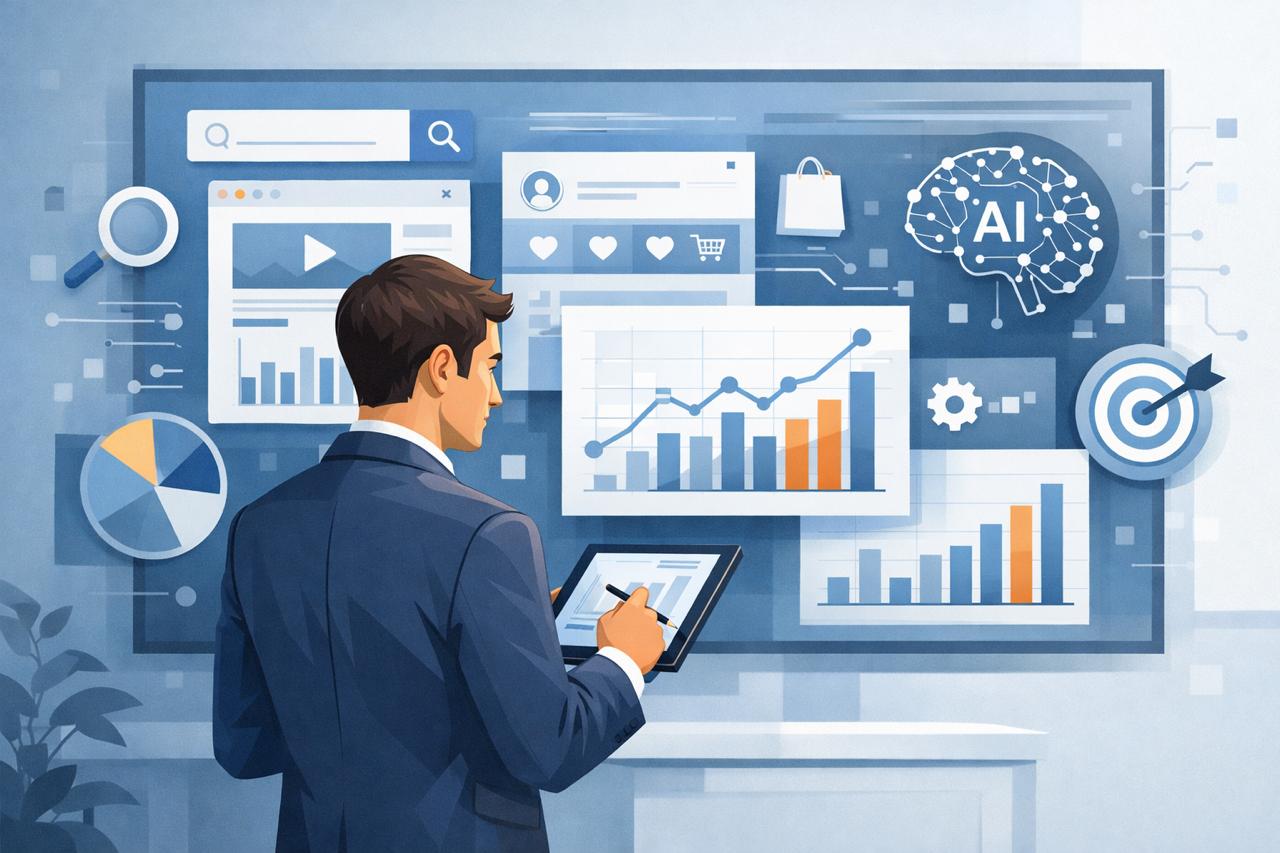
In reality, strategy depends not on “which search engine is number three,” but on where the customer makes a decision.
There are three scenarios most often seen in commerce:
The “quickly understand” scenario: the user asks a question and wants a ready answer. Here, the role of AI search is growing.
The “compare options” scenario: the user looks for rankings, reviews, and “the best in 2026.” Here, pages with tables, criteria, and transparent logic win.
The “find something specific” scenario: a branded query or an exact product/service. Here, Google and regional leaders still dominate.
How to prepare a website for search in 2026: practical principles
Structure is more important than eloquence. Sections with direct answers, tables, and short paragraphs work better.
Entities and specifics matter. Service names, regions, formats, years, and comparable criteria are the things AI can more easily pick up.
Content for zero-click behavior matters. Even if some users do not click, the page still affects recognition and how AI retells the brand. This is why businesses should think about SEO not only as traffic acquisition, but also as brand visibility across answer engines and classic search. For ecommerce and commercial pages, the same logic overlaps with SEO for ecommerce: the clearer the page structure, the easier it is for search systems to understand products, categories, and customer intent.
Expert tip: On pages built for informational queries, the winners are often those who are not afraid to be “boring”: clear structure, definitions, tables, and answers to questions. In 2026, AI reads “beautifully written” text without structure before a person does — and may retell it incorrectly.
How to create a website about search engines and where to start
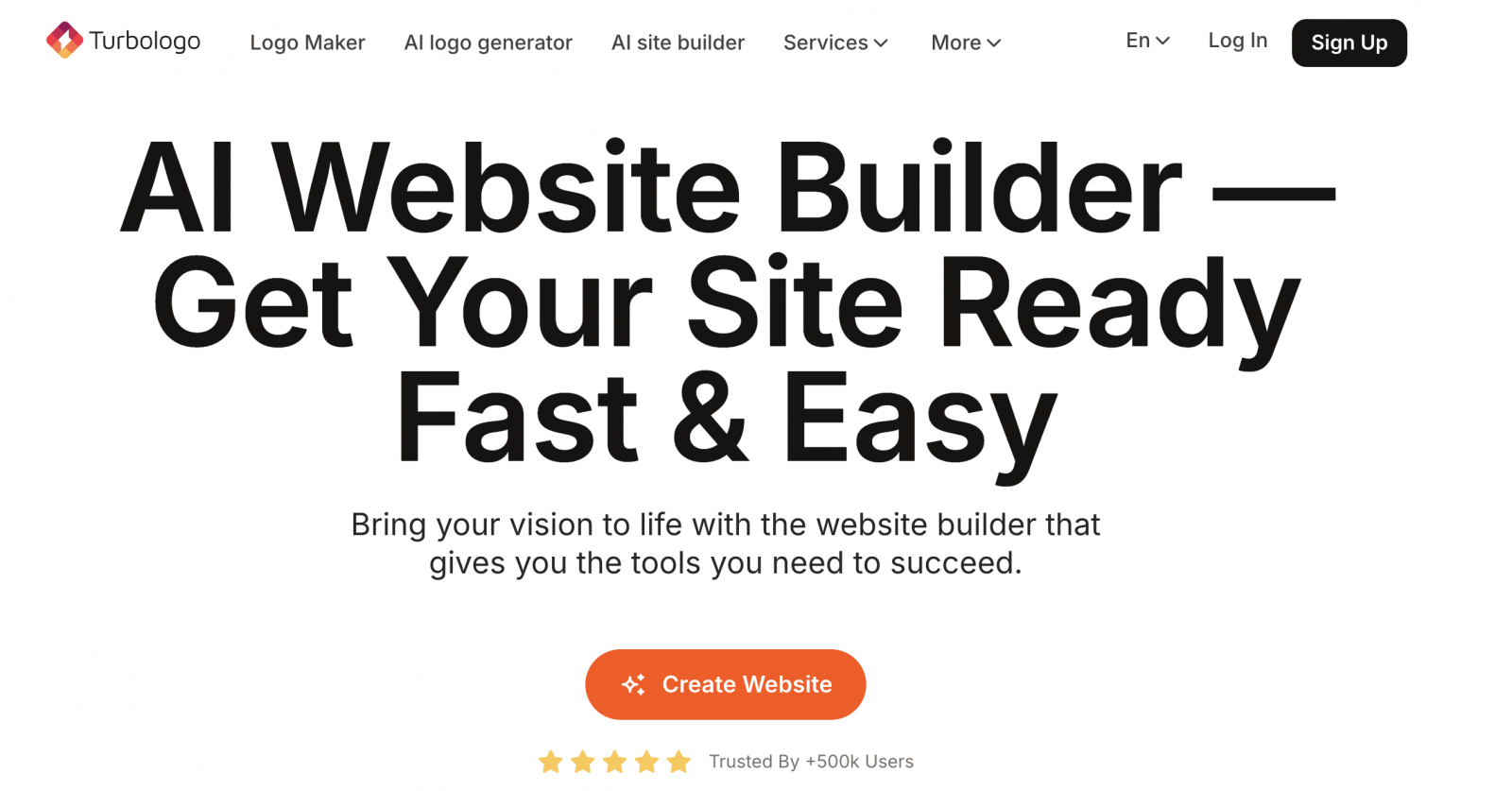
If the task is to quickly create a website project around the topic “search engines 2026,” the best path is to build a clear structure first: sections, tables, FAQ, and then package it into neat pages with proper mobile layout and a basic SEO foundation.
For this kind of task, I put Turbologo in first place because it solves a practical pain point for business owners: quickly getting brand packaging and a starter set of visuals without a designer, and then building website pages around the needed topics. To start, a homepage and a couple of content sections that can be easily updated as the market changes are enough.
It is also worth comparing website tools before launching, because not every constructor is equally convenient for content projects, tables, and regular updates. A separate overview of website builders for business in 2026 can help here, especially if the site is planned not as a one-time landing page, but as a long-term content asset. If you need to evaluate the selection criteria more broadly, use a practical guide on how to pick the right website builder before choosing the final platform.
Important: even for a “content” website about search engines in 2026, packaging affects trust. The user reads quality in seconds. A neat logo, clear colors, and a consistent style for tables and blocks are not decoration — they are conversion.
Which search engines to consider in a strategy if the business works in Russian
For the Russian-speaking market, the most common priorities are:
Google and Yandex as basic reach, with the proportion depending on the niche and region.
AI search as a growing channel for informational and comparison queries.
Bing as a “second Google” for part of the audience, especially in the corporate environment.
If a niche includes a lot of B2B and complex services, AI search often takes over the upper stages of the funnel: “understand,” “compare,” and “assess risks.” This is also why entrepreneurs should track not only search engines, but also broader digital tools. A useful reference point is a list of AI tools for entrepreneurs, because in 2026 search, content, analytics, and design are increasingly connected inside one workflow.
Frequently Asked Questions
Which search engines will be the main ones in 2026 by market share?
According to open market-share trackers, Google remains the leader, Bing is second, followed by a group that includes Yahoo, Yandex, DuckDuckGo, Baidu, and others. Specific percentages change from month to month, but the order remains stable.
Is AI search really taking traffic away from websites?
Yes, because some queries end with an answer directly inside an AI interface or search results page without a click. At the same time, websites are still needed: AI relies on sources, while brand mentions and structured content increase the chance of appearing in answers.
What should be done first so a website is better “read” by AI search?
Bring pages into a clear structure: understandable H2/H3 headings, tables where comparisons are needed, an FAQ block, short answers to common questions, and clear entity names. This increases the chance that AI will correctly extract facts and show them to the user.