A bad name rarely looks like a mistake at first. The problem appears later: the domain is unavailable, a marketplace flags your listing because of a similar brand, a lawyer finds a trademark conflict, or customers confuse your company with a competitor in ads. After 10+ years in design and branding, I keep seeing the same pattern: saving one hour on research turns into weeks of rework. This guide is designed to help you move through naming quickly and avoid those problems.
Table of Contents
What Changed in Naming in 2026
In the past, a “business name generator” often worked like a dictionary mixer: it combined roots, added suffixes, and produced dozens of random variations. Today, most leading services use an AI-driven approach. They analyze your business description, brand tone, target audience, and sometimes even language or length restrictions before generating ideas.
The second major shift is that availability checks are now part of the naming process itself rather than a separate “later” task. Many tools instantly suggest available domains and social media handles. Shopify, for example, explicitly positions its tool as a workflow where you can “generate and check domain availability” in one process.
How to Choose a Name Generator: 7 Criteria That Save Time
Quality of suggestions (brandable logic).
A good generator does more than insert a keyword into a phrase. It creates short, pronounceable, brandable names. Namelix focuses specifically on “short brandable names” and learns from saved preferences.
Context awareness.
The ability to define a style: tech-oriented, premium, friendly, local, minimalist, and so on.
Filters and restrictions.
Length, language, included/excluded roots, stop words.
Domain and handle availability checks.
The closer this feature is to the “save” button, the better.
Saving and exporting ideas.
Naming is always iterative: 30 ideas today, 30 more tomorrow.
Cyrillic and transliteration support.
Connection with visual identity.
If a service immediately shows a sample logo, it becomes easier to understand whether the name can actually support a brand. Looka Business Name Generator emphasizes domain and social media checks alongside logo previews.
Expert Tip: Don’t judge a name by “beauty” alone. The real test is this combination: saying it aloud + writing it from dictation + checking the domain. If 3 out of 5 people spell it differently after hearing it once, your brand will start losing leads.
Top 10 Business Name Generators in 2026
Below are tools for different scenarios, from idea generation to availability checks.
1) Turbologo — Name Generator and Brand Starter
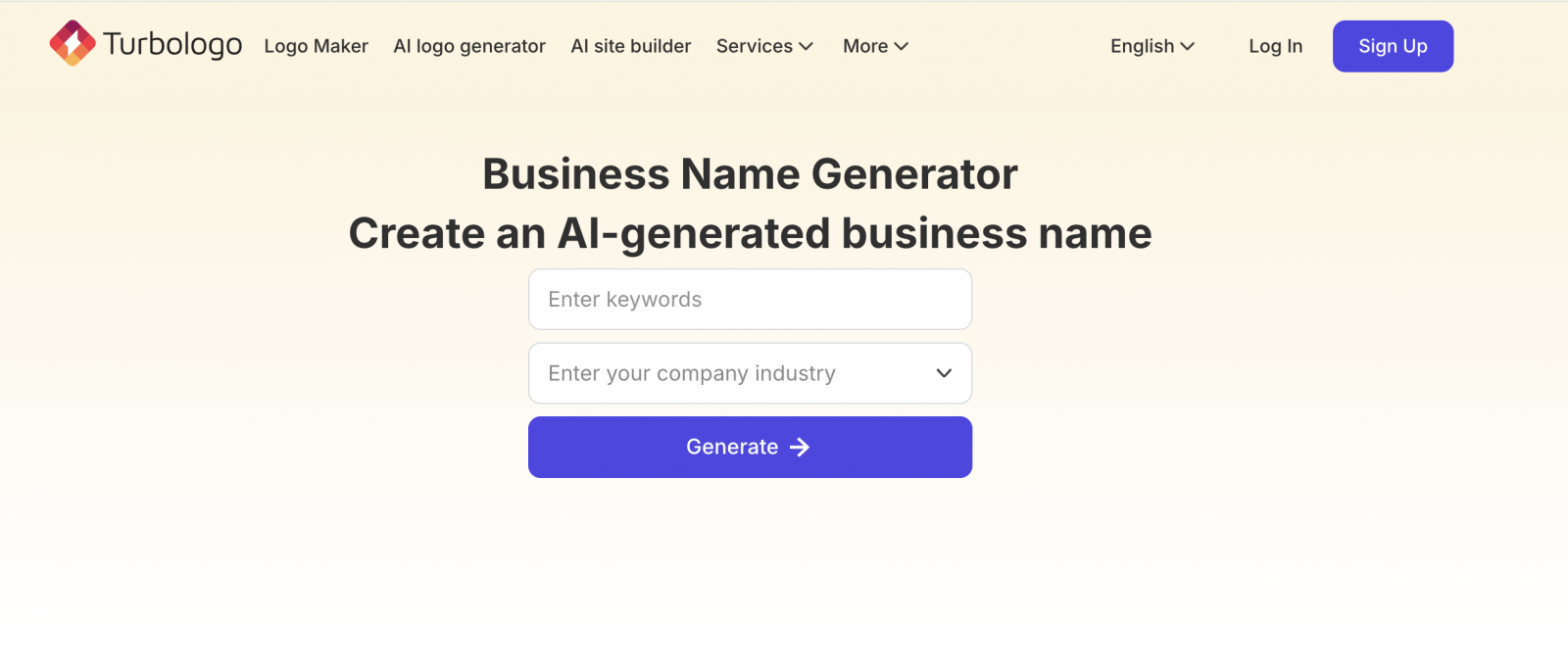
Best for: launching a business, marketplace products, services, creative studios.
Strengths: generates ideas for different styles and industries, with a fast transition from a name to a visual brand package. The Russian version includes a dedicated “Brand Name Generator” section.
Limitations: like any AI naming system, results depend heavily on the input quality.
Quick input tip: instead of typing “coffee shop,” try “neighborhood coffee shop, calm atmosphere, no anglicisms.”
Feature that often saves time: the business name generator is a convenient place to gather the first 100–200 ideas before moving directly into validation and brand packaging.
2) Namelix
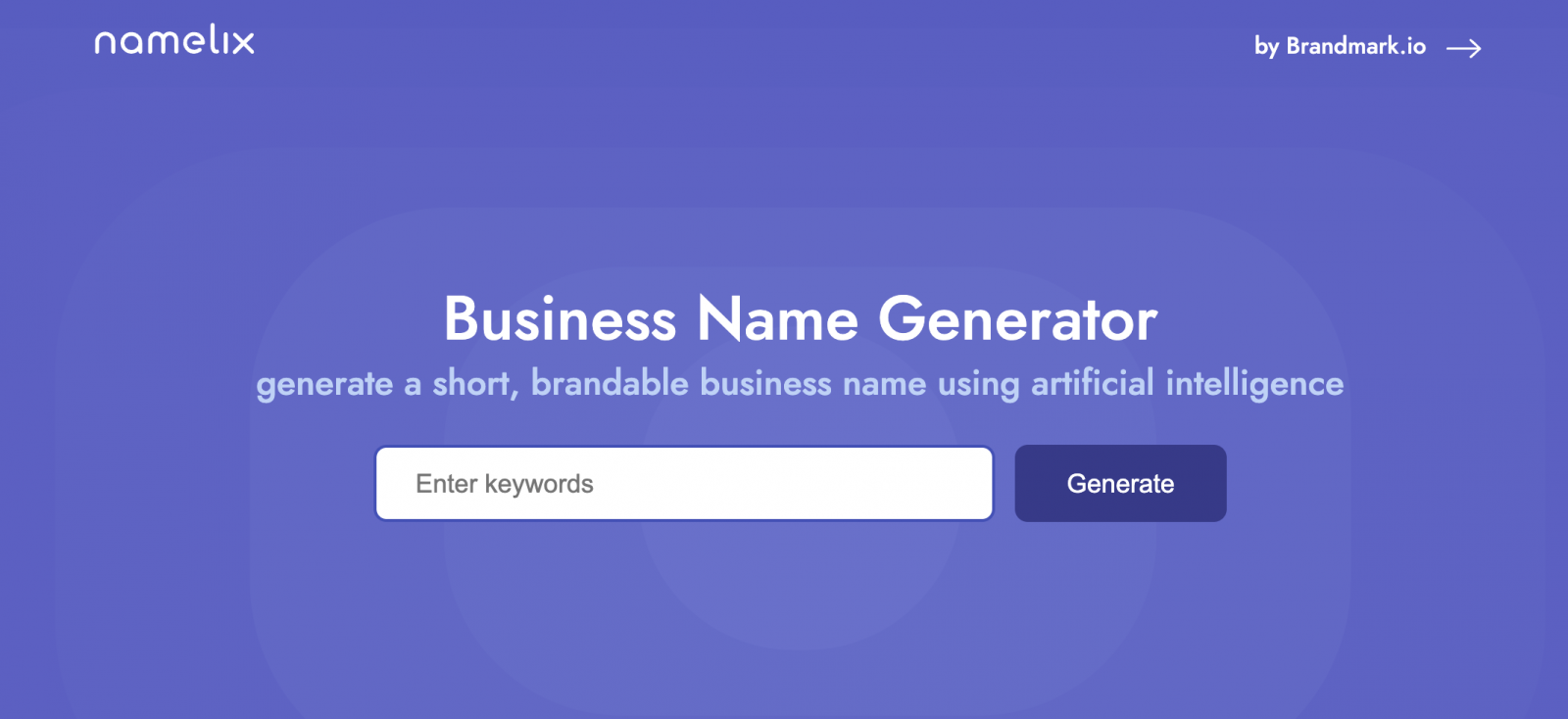
Best for: startups and digital products where short names matter.
Strengths: focuses on short, brandable names and learns from saved preferences.
Limitations: optimized mostly for English-language naming logic, so Russian-language niches require stronger filtering.
Quick tip: enable the “short” option and save only names that are easy to pronounce aloud.
3) Looka Business Name Generator
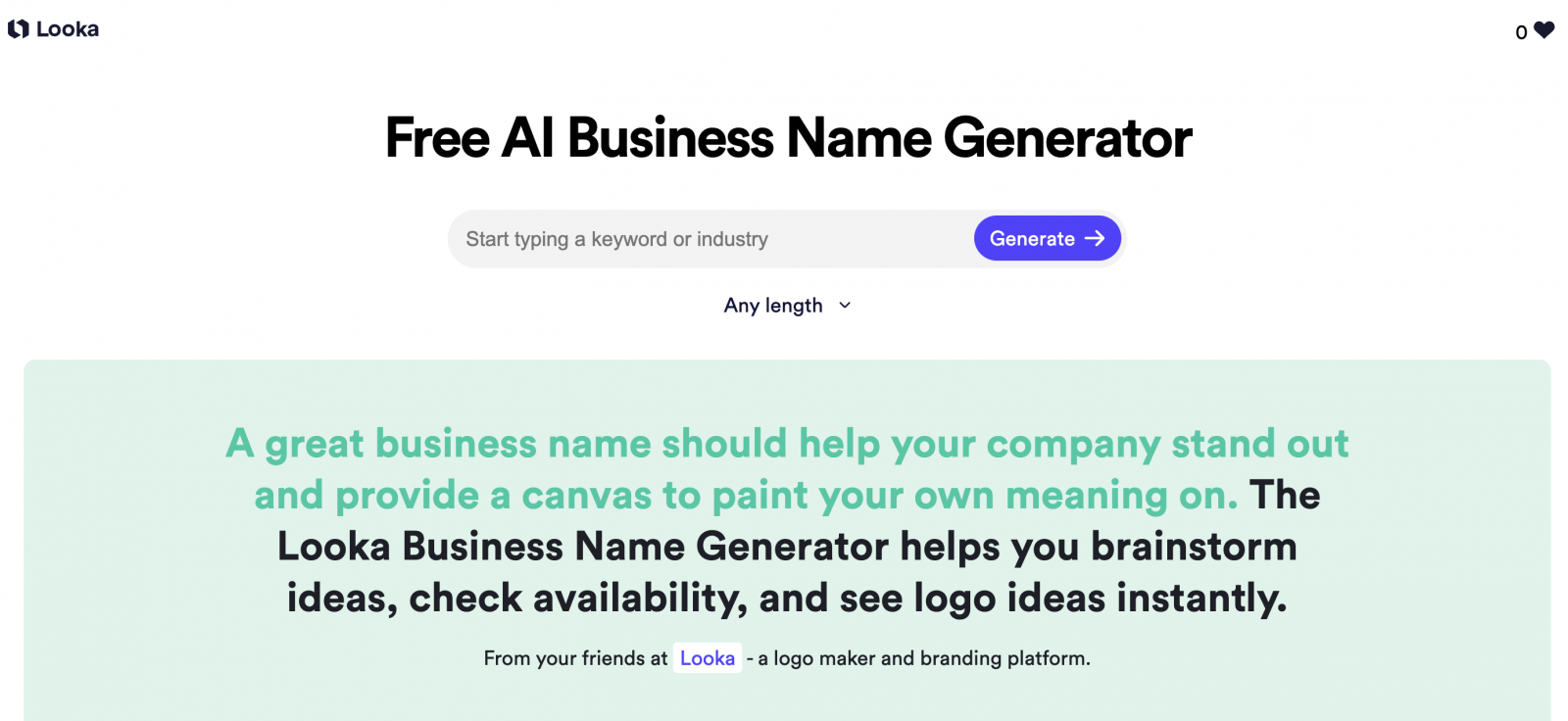
Best for: users who want to preview a logo direction alongside the name.
Strengths: idea generation, domain and social media checks, logo concept previews.
Limitations: performs better in English.
Quick tip: try abstract concepts like “trust” or “growth” if keyword-based searches produce generic results.
4) Shopify Business Name Generator
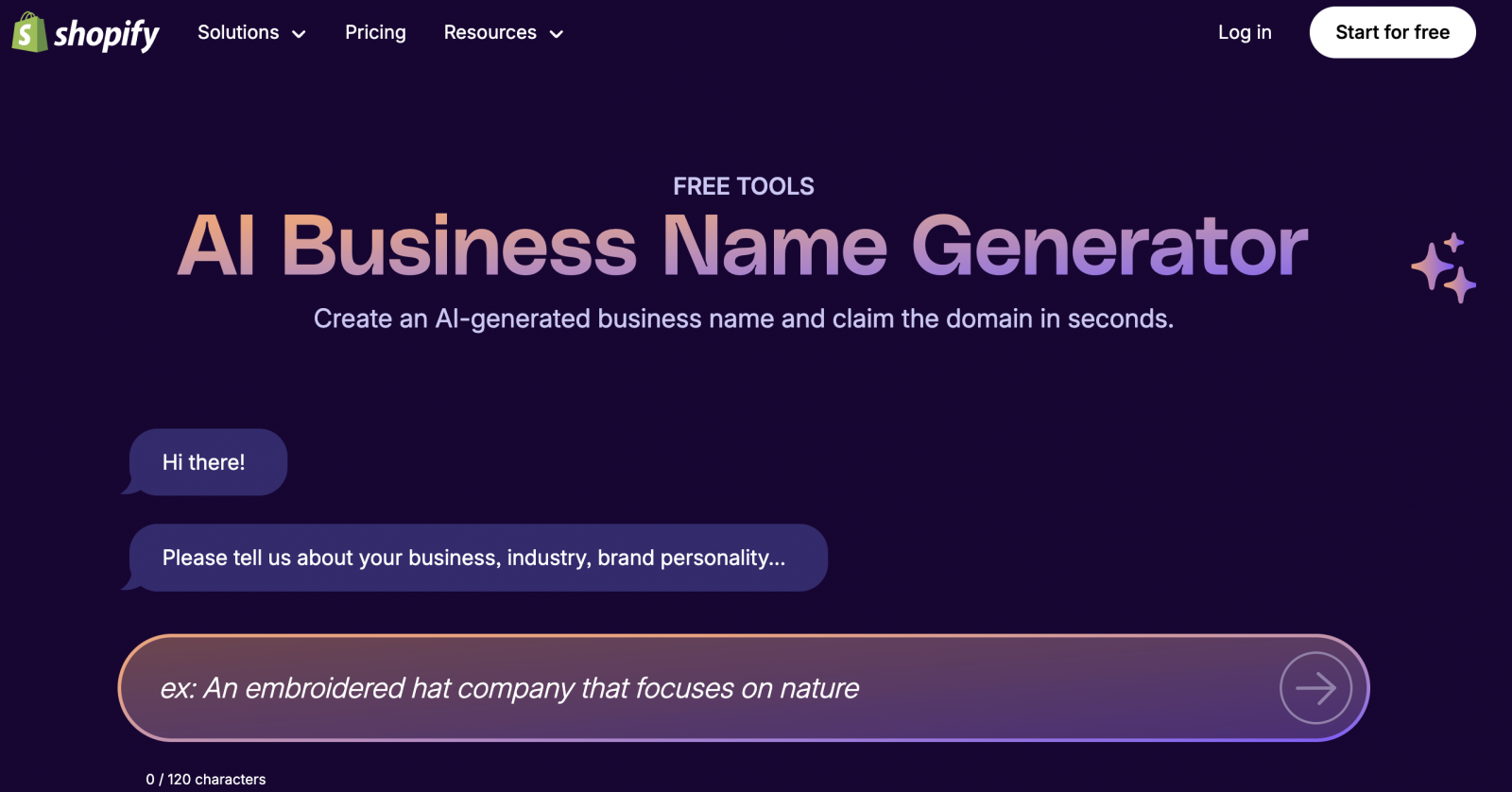
Best for: ecommerce, marketplace brands, DTC projects.
Strengths: fast idea generation and strong focus on domain availability.
Limitations: primarily oriented toward English-language domains and ecommerce workflows.
Quick tip: instead of “clothing store,” use inputs like “streetwear” or “minimal apparel.”
5) Wix Business Name Generator
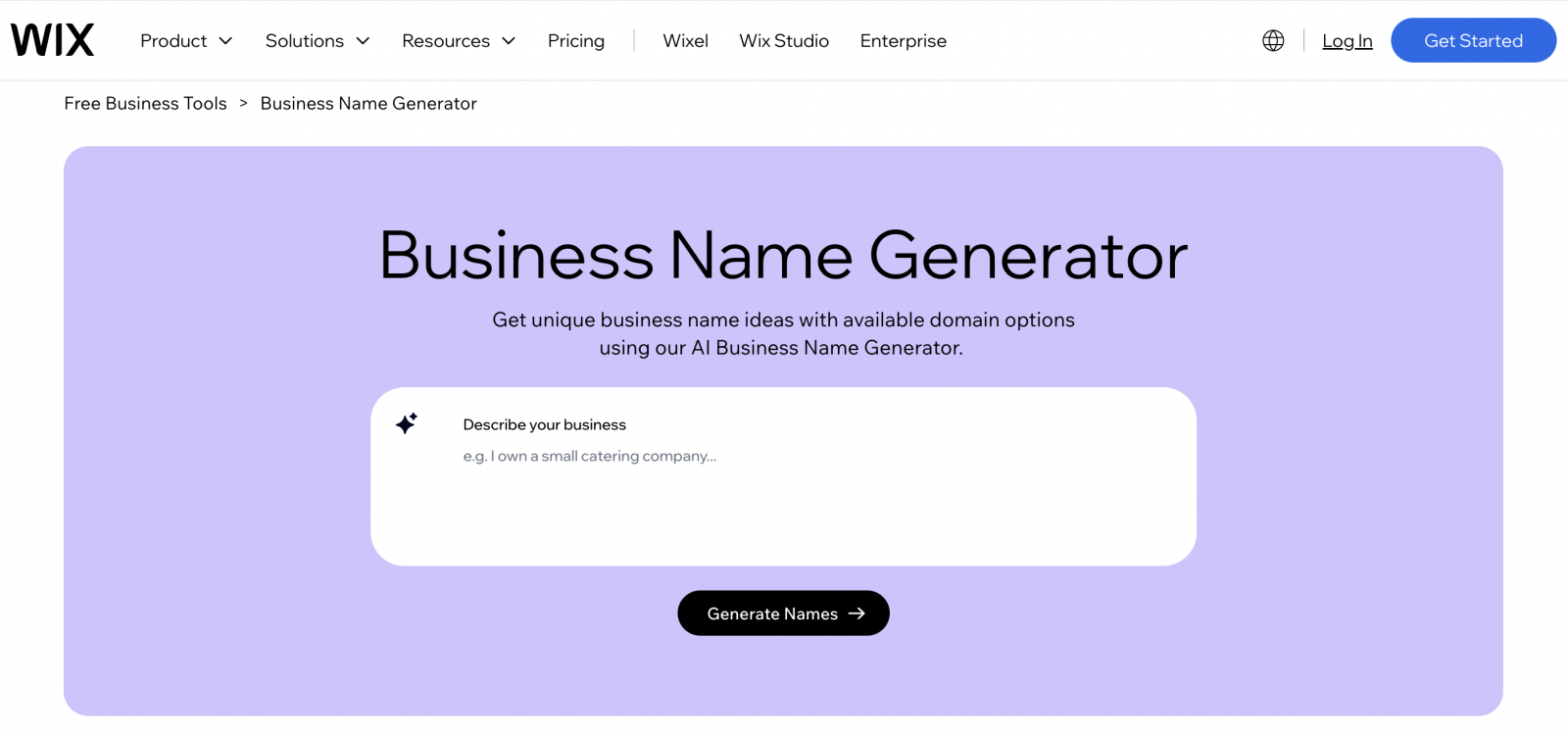
Best for: businesses building a website on Wix at the same time.
Strengths: simple generation process, with integration between naming, websites, and logo creation documented in Wix support materials.
Limitations: some suggestions sound formulaic.
Quick tip: change industries and rotate 2–3 keywords to escape clichés.
6) Canva Business Name Generator
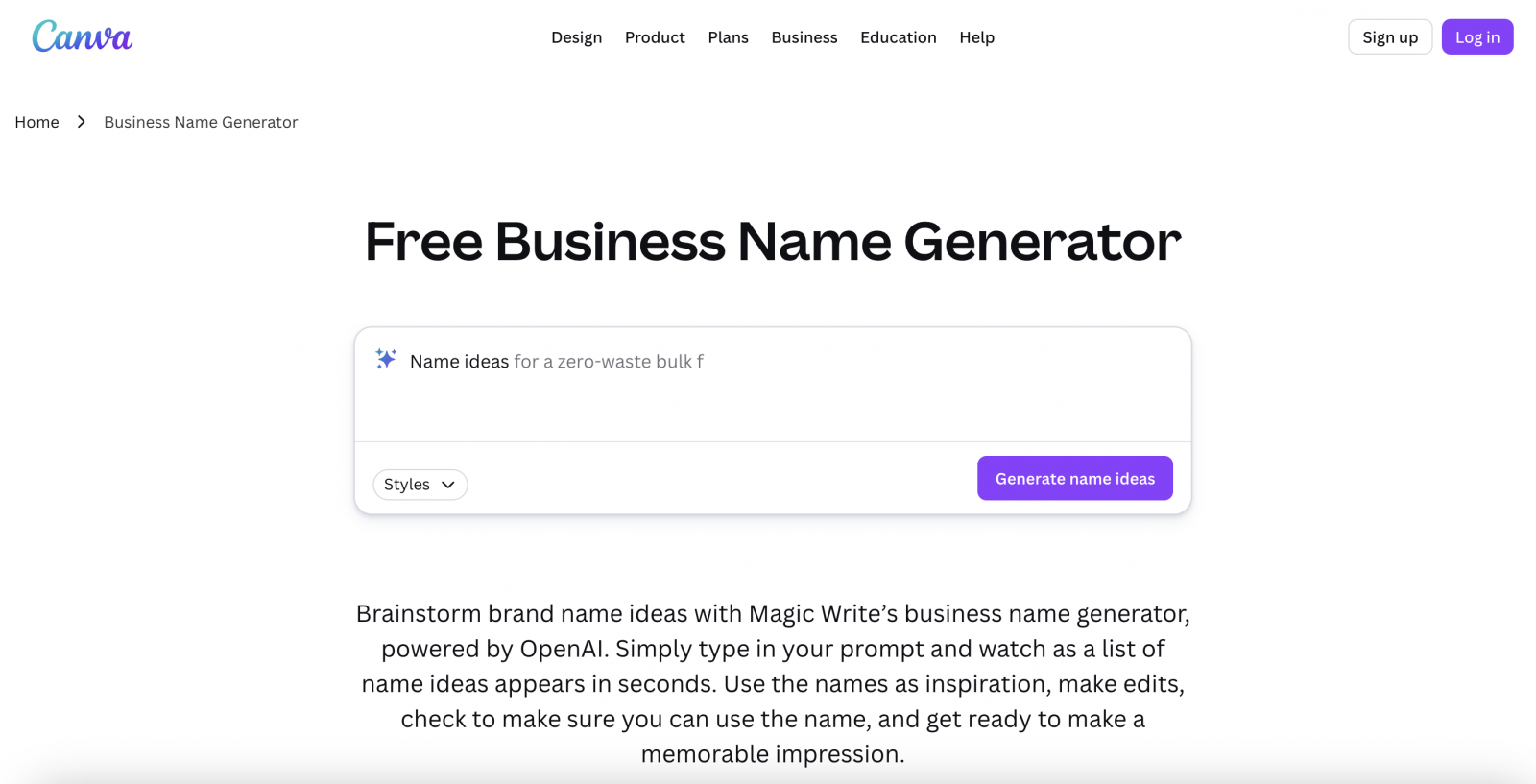
Best for: solo founders and marketers already working inside Canva.
Strengths: integrated into the Canva ecosystem and powered by OpenAI.
Limitations: generated names still require manual uniqueness checks.
Quick tip: request “30 names,” then manually filter the strongest options.
7) Squarespace Business Name Generator
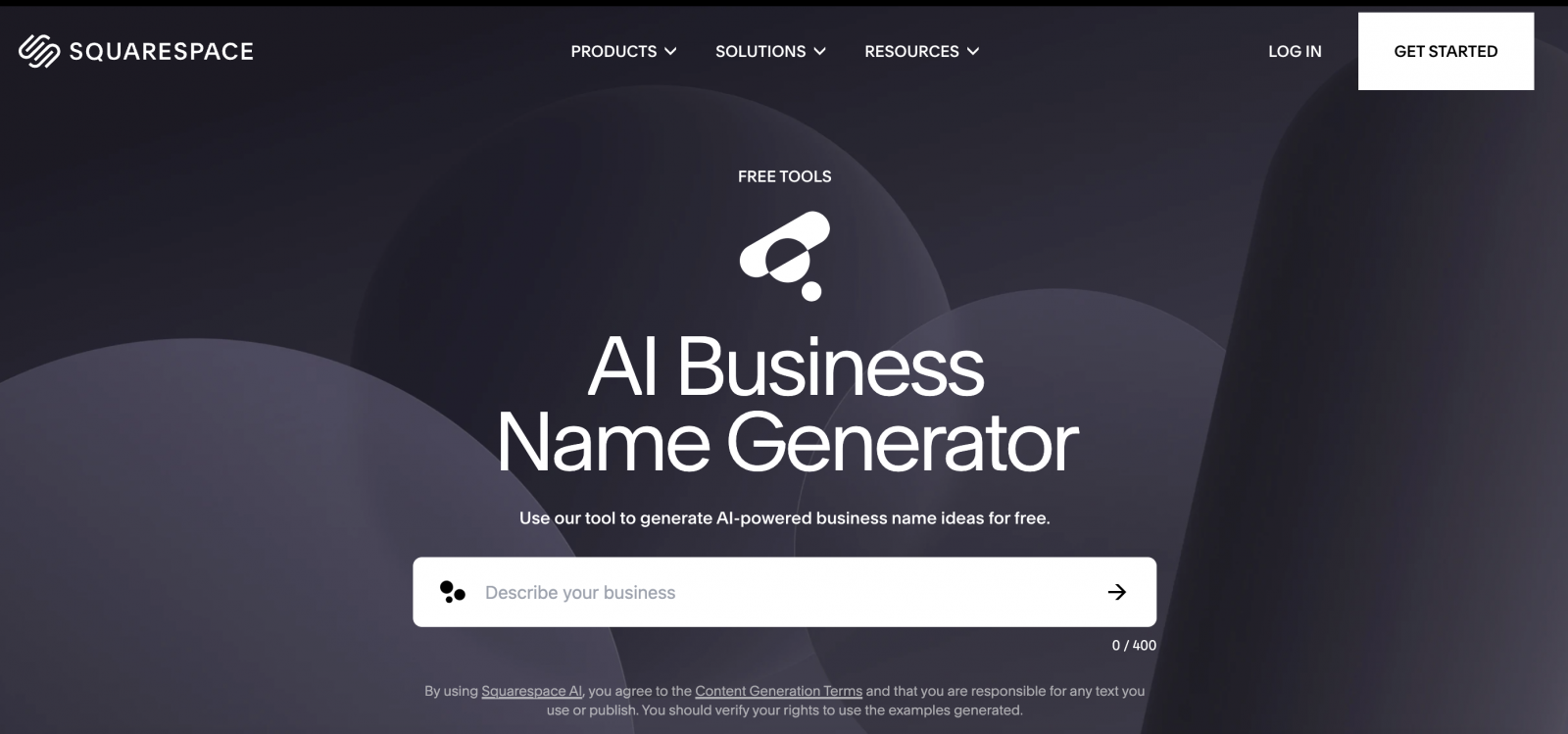
Best for: people launching a website who need quick inspiration.
Strengths: free tool that creates idea lists for businesses.
Limitations: more useful for finding directions than final brand names.
Quick tip: run multiple sessions with different brand values.
8) NameSnack
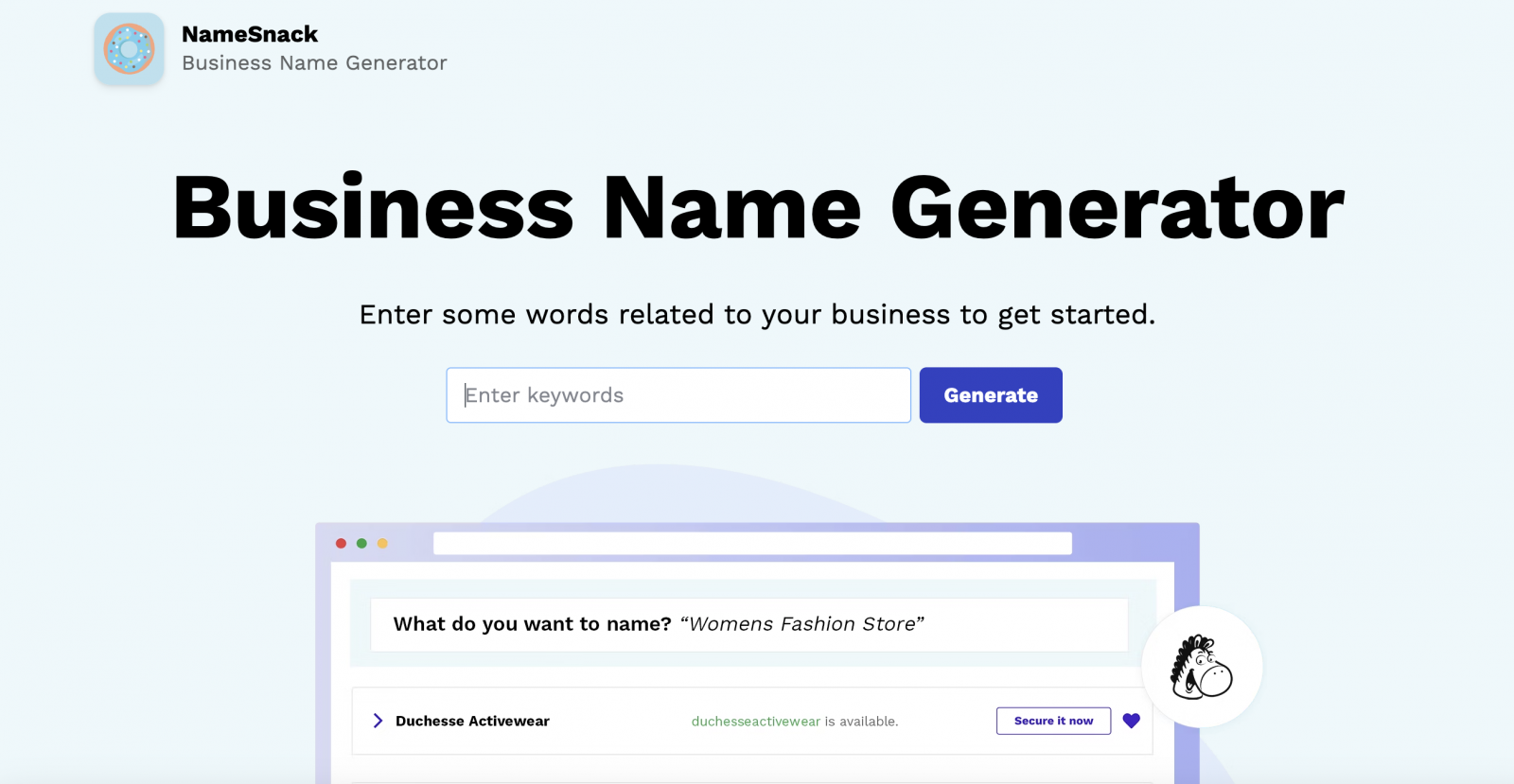
Best for: users who want a large batch of short ideas and quick filtering.
Strengths: claims to generate 100+ short brandable names.
Limitations: the interface and logic are optimized for English-language domains.
Quick tip: generate ideas first, then run them through a phonetic filter (see the algorithm below).
9) Namify
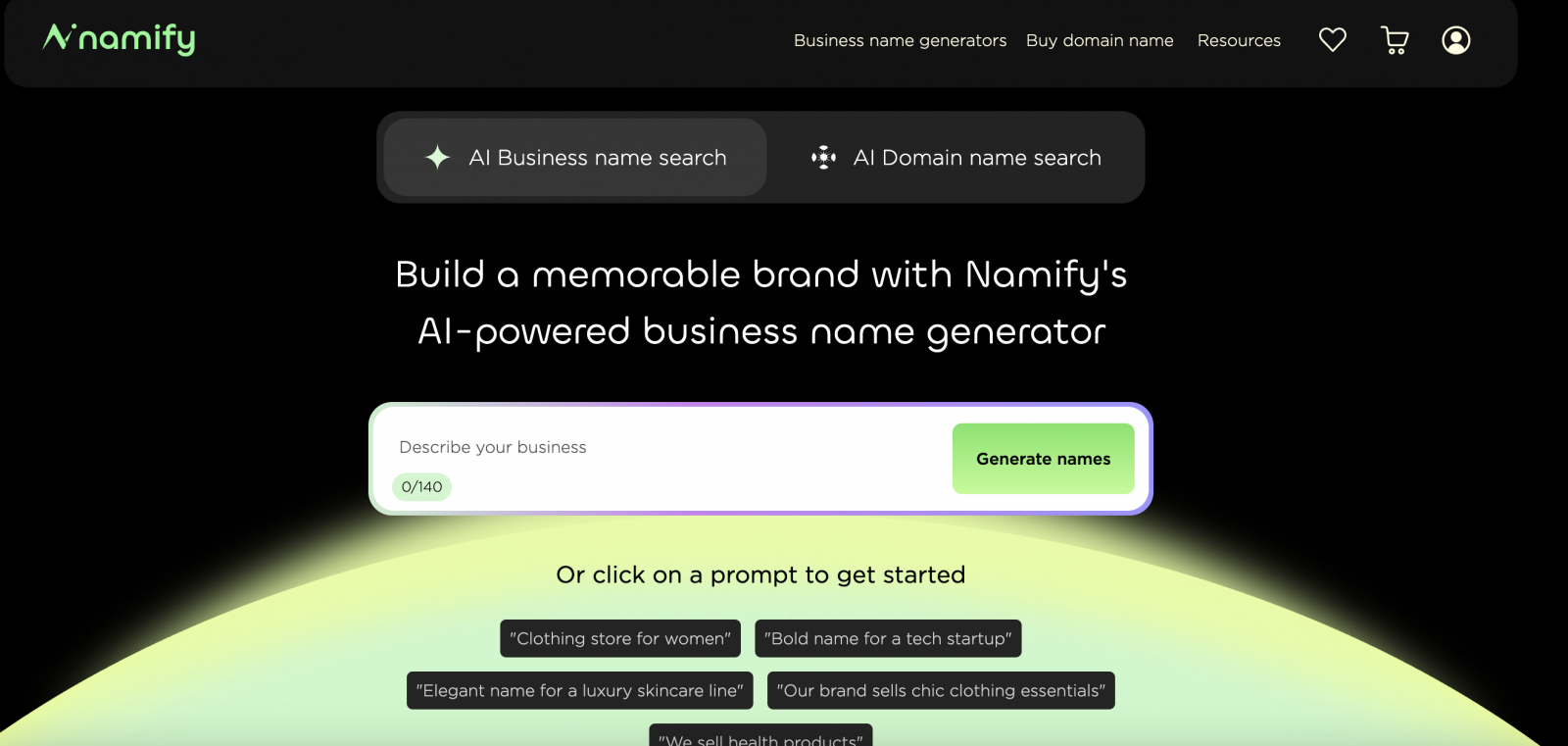
Best for: products that need a “name + domain direction” workflow.
Strengths: combines AI-generated names with domain suggestions.
Limitations: some domain zones are irrelevant for the Russian market.
Quick tip: remove ideas that break down when transliterated.
10) BrandCrowd Business Name Generator
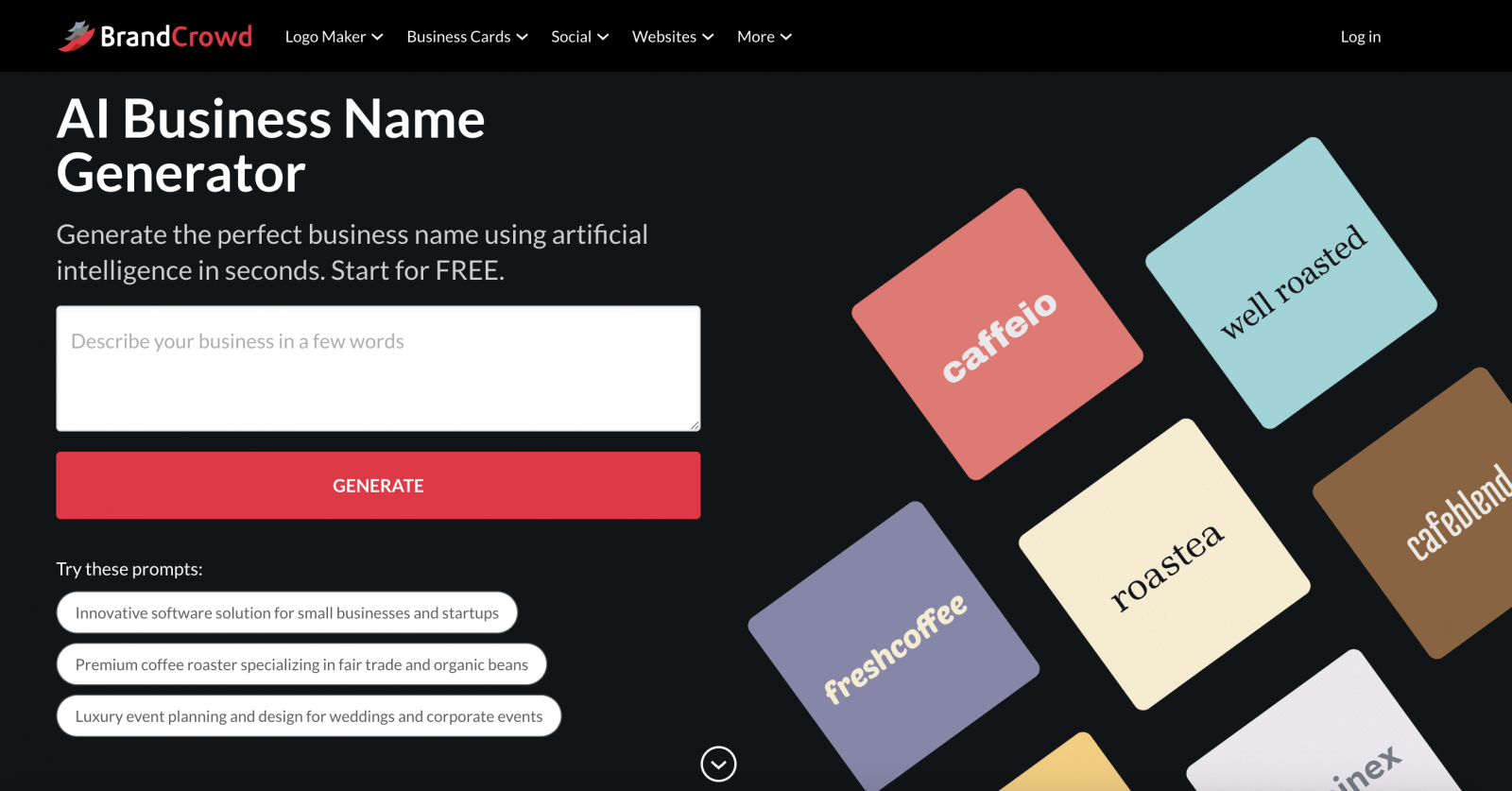
Best for: users who want “name + quick visual context.”
Strengths: AI-generated names and a simple onboarding process.
Limitations: without a clear brief, results become inconsistent.
Quick tip: lock in 2 brand attributes and don’t change them during one generation session.
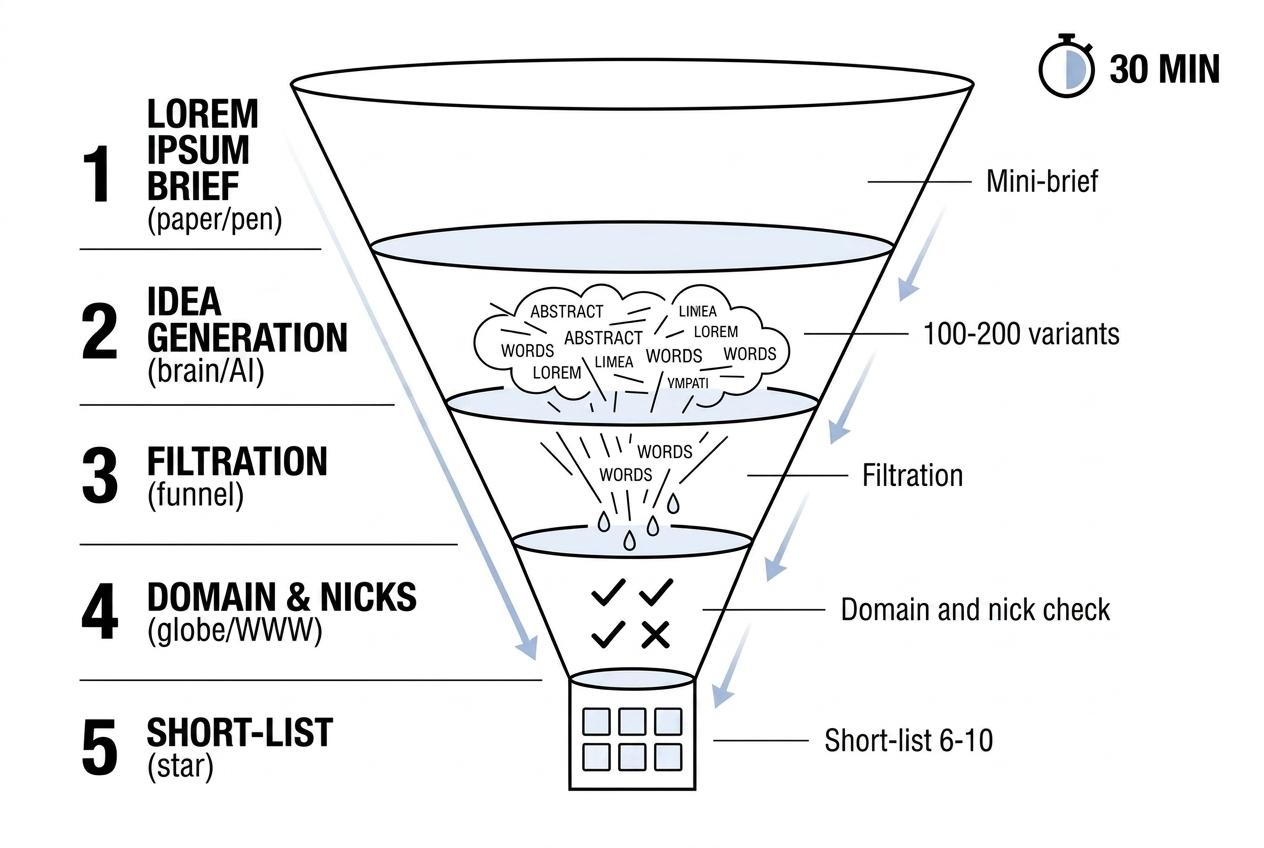
A 30-Minute Naming Algorithm: From Business Description to Shortlist
The goal is to build 6–10 solid options without problems related to domains, pronunciation, or trademarks.
Step 1. Create a 6-Line Mini Brief
Include:
- niche
- target audience
- geography
- brand tone
- 3 associations
- 5 restrictions
Restrictions matter more than associations because they eliminate weak ideas faster.
Step 2. Generate 100–200 Variants in 2–3 Services
One tool rarely provides full coverage. A combination like “Namelix + Turbologo” usually creates a mix of short synthetic names and more human-sounding conceptual options.
Step 3. Filter Using Four Rules
Pronunciation: the name should be readable immediately.
Meaning: associations should match the positioning.
Spelling: it should be writable without “spelling it out.”
Step 4. Check Domains and Social Handles
If the service does not include availability checks, open a separate domain checker and track availability in a spreadsheet.
Step 5. Run a Trademark Risk Check
For Russia, a logical first step is checking trademarks through the Rospatent search platform.
Expert Tip: During filtering, many founders choose a “clever” name that only makes sense after explanation. On a landing page, that kind of name looks like a random set of letters. In advertising, it becomes a budget leak because people neither remember nor search for it. A neutral but readable name is often better. You can always build meaning later through visuals and communication.
Common Mistakes That Lead to Rebranding
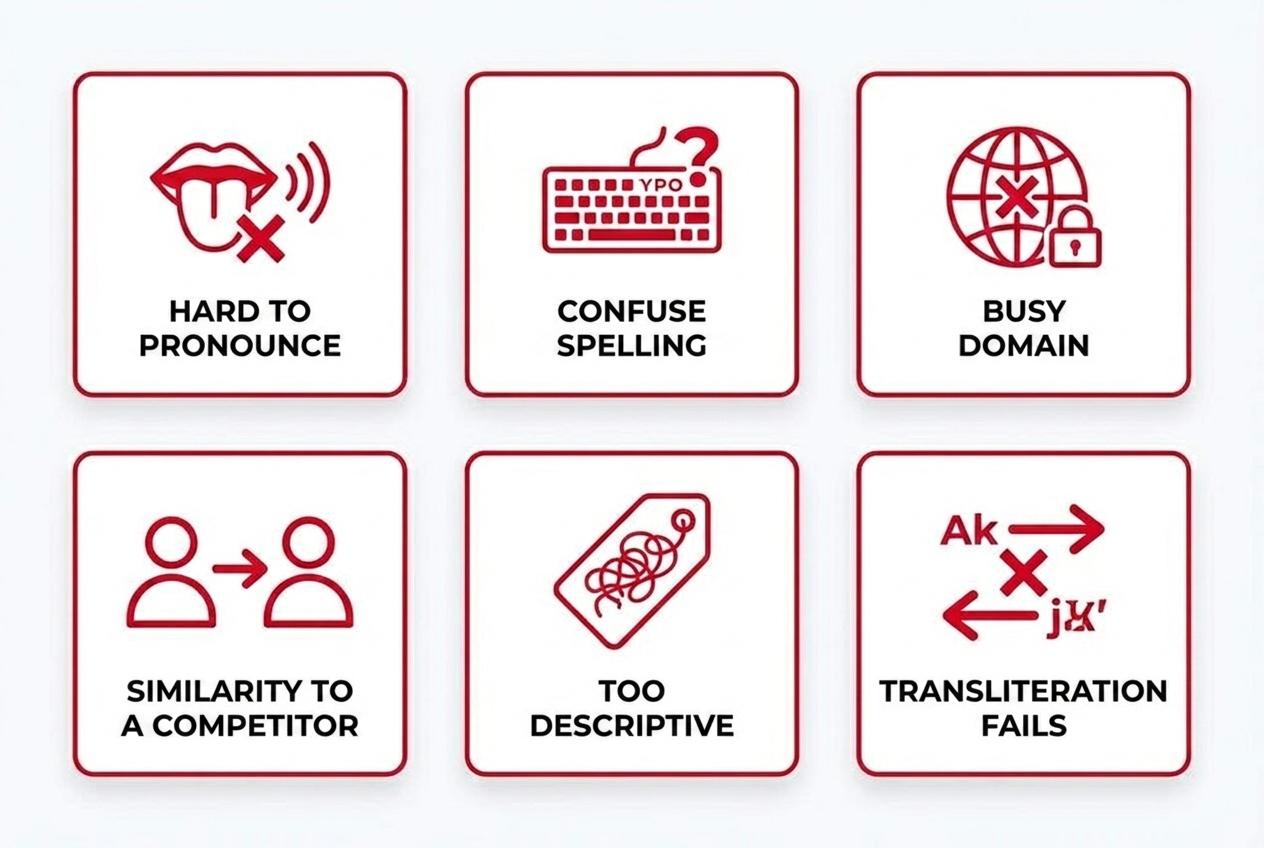
One of the most common problems is choosing a name that is “too descriptive.” Names like “Coffee Near Home” or “Phone Repair Service” explain the business but fail to differentiate it.
Another issue is chasing English-sounding names without checking pronunciation.
The third mistake is selecting a name that looks great in Cyrillic but falls apart in a domain name.
The fourth is ignoring trademark searches and similar brand checks. Rospatent explicitly provides search access through its platform, and businesses should use it before launch.
How to Turn a Chosen Name into Brand Assets
Once the shortlist is ready, the real branding stage begins: visual systems, typography, colors, adaptations for signs, app icons, and marketplace cards. This is where the workflow “name → logo concept → brand assets” becomes useful. Turbologo’s homepage itself demonstrates this brand-builder approach.
A final validation test: place the name inside a business card layout, an avatar, and a website header. Then check whether readability still holds up. This simple exercise can save months of problems later.
Frequently Asked Questions
Which business name generator should I choose if I need Russian language support?
Services with Russian localization usually produce more natural Cyrillic-based names faster. For most startups, Turbologo combined with one English-language generator is enough.
Do I really need a trademark check if my business is small?
Yes. Think of it as a risk check. Searching the Rospatent database helps identify conflicts and similar trademarks before launch.
Why do generators produce so many strange ideas?
The reason is almost always the brief. The more abstract the input (“services,” “store”), the noisier the results. Detailed niche descriptions and brand tone dramatically improve output quality.
How many names should stay on the shortlist before making a final choice?
A practical range is 6–10. Fewer options increase the risk of fixation, while too many create endless discussions and subjective debates.