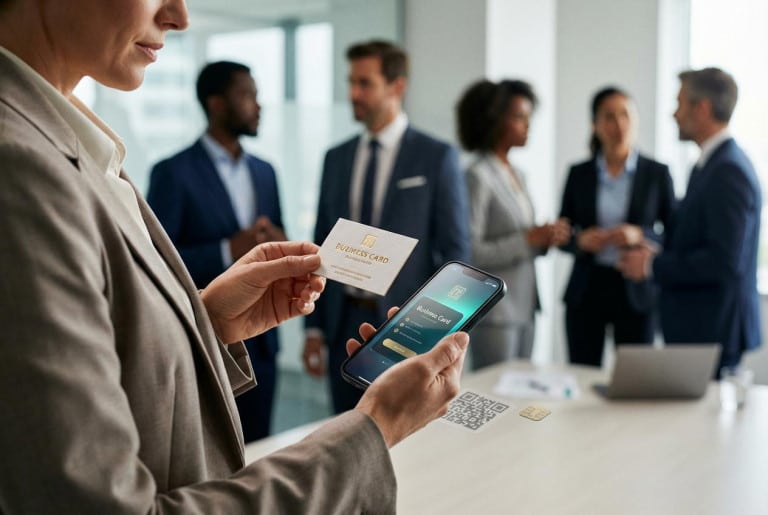
When people talk about business cards, the debate is usually reduced to personal preference. Some prefer thick paper and tactile feel. Others lean toward QR codes, NFC, and quick contact sharing without manual input.
Over the past few years, I’ve seen a different picture: the problem is no longer the medium itself. The real question is whether the business card moves the interaction forward — to a call, a message, a meeting, or a lead.
In this article, I’ll break down which formats work in 2026, where paper still holds its ground, and why a hybrid approach is increasingly winning for businesses. The market is clearly moving in that direction: recent reports highlight growth in digital business cards, demand for analytics, CRM integrations, and scalable team solutions.
Table of Contents
Why This Question Became Relevant Again
Fifteen years ago, a business card was simple: name, phone, email, address. You printed a batch and forgot about it.
In 2026, that no longer works.
Contacts change faster. Employees switch roles more often. Communication channels evolve: messengers, landing pages, directories, social media, booking systems. In this environment, a paper card often becomes outdated before the stack runs out.
At the same time, digital business cards are no longer niche. They now include QR codes, NFC, analytics, lead capture forms, and CRM integrations. That’s why current search results focus less on “design” and more on cost, updates, analytics, scalability, and lead capture.
Still, it would be lazy to say paper cards are gone. They remain strong in scenarios where personal interaction, gesture, and physical presence matter. Even pro-digital articles from 2025–2026 acknowledge their value in offline meetings, service industries, and events — where a physical object reinforces the reality of a brand.
Where Paper Business Cards Still Win

Paper business cards persist for practical reasons, not nostalgia.
They don’t depend on signal, battery, or user habits. You can hand them over instantly, without explanation. For local businesses — dentists, salons, private practices, small B2B services — they remain effective, especially in face-to-face conversations.
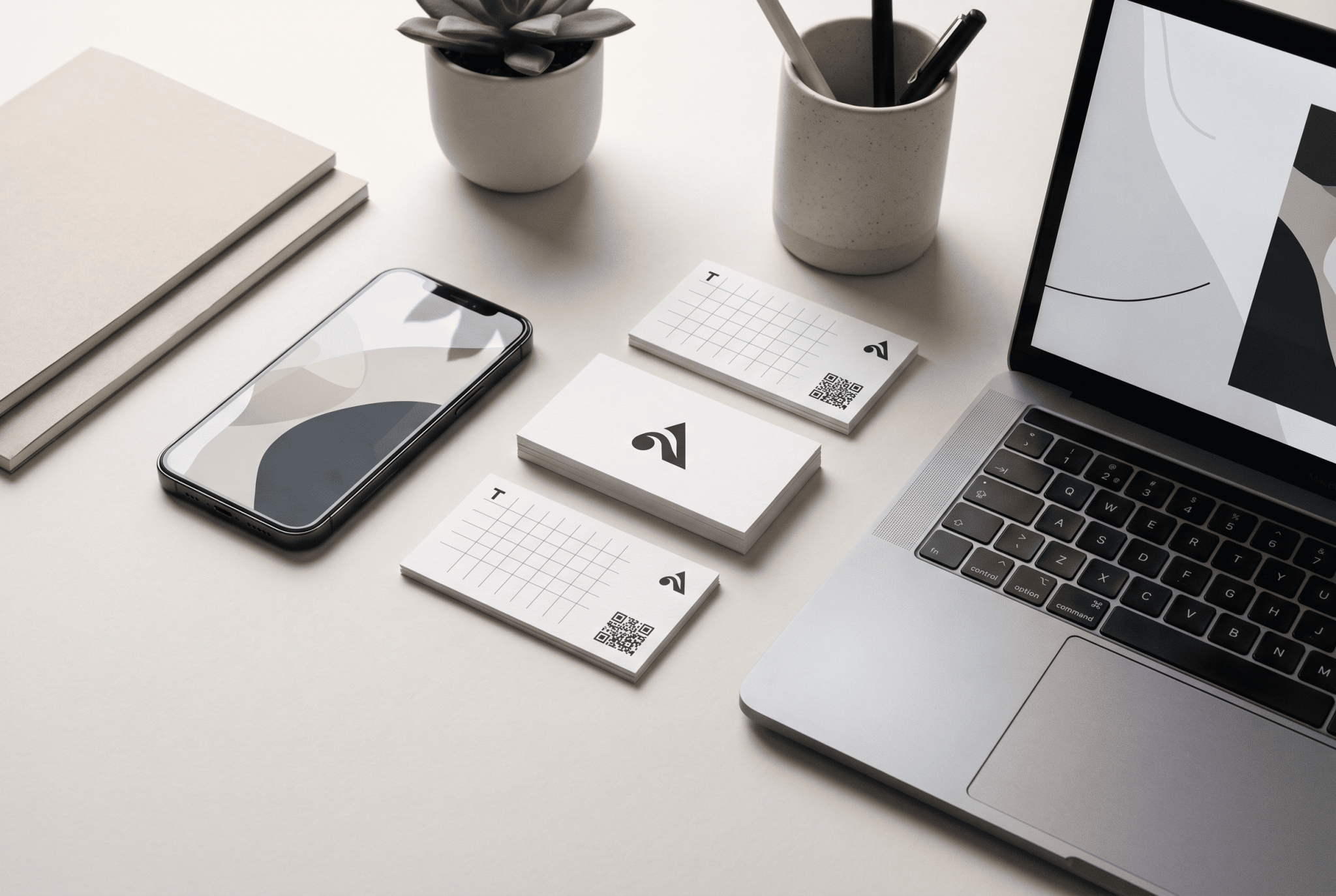
There’s also a psychological layer. A well-designed card reinforces brand perception. Paper quality, texture, color, layout, logo, typography — all contribute to trust. In offline environments, a physical object is often more memorable than yet another QR code on a screen.
But the problem appears later.
Paper gives you almost no feedback:
- Was the contact saved or discarded?
- Did the person visit your site?
- Which meeting generated a lead?
For businesses tracking funnels, this is a major blind spot.
Expert tip:

A common mistake I see is evaluating a business card by appearance only, ignoring what happens after it’s handed over. A card that feels nice but is inconvenient to save almost always loses to one that accelerates follow-up.
Why Digital Business Cards Are Winning More Often
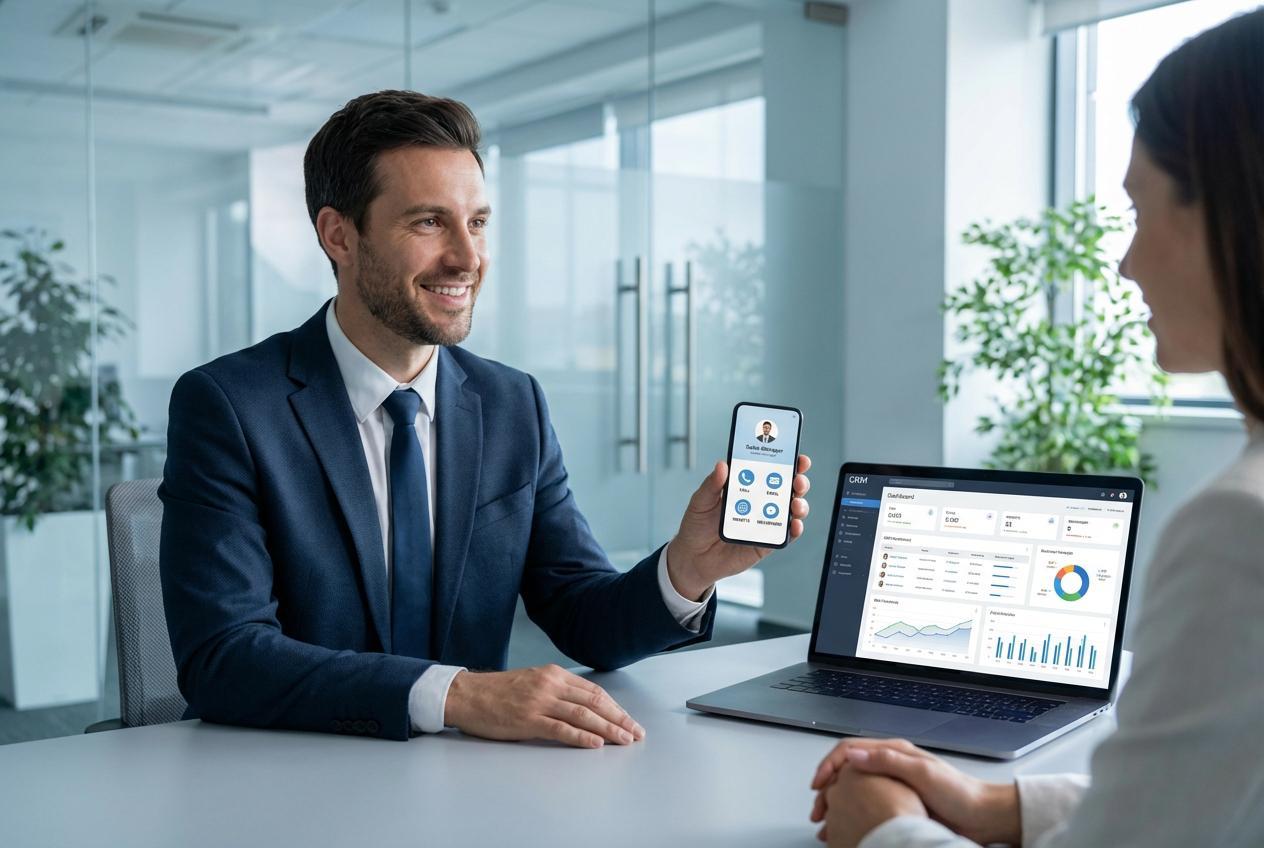
Digital cards aren’t better because they look modern. Their key advantage is updateability.
You change a link, phone number, service description, or photo once — and everyone sees the updated version. For growing businesses, this saves time, money, and effort. For teams, it eliminates chaos when different employees use outdated information.
Corporate reports consistently emphasize this: digital cards are becoming part of a controlled sales and branding infrastructure.
The second advantage is speed of exchange. QR codes and NFC eliminate manual entry. Contacts are saved faster, reducing friction. Research and market reviews in 2026 consistently show:
- fewer steps between meeting and saving contact
- higher follow-up rates
- better visibility into event ROI
Some of these numbers come from vendors, so I treat them cautiously. But the direction is consistent: digital cards are no longer a novelty — they are tools for capture, attribution, and CRM synchronization.
The third advantage is scalability.
One personal card and 100 sales team cards are very different problems. With paper, you need printing, reprints, consistency control, error fixing. Digital systems solve this centrally with dashboards, templates, and admin control.
NFC and QR: Not Competitors, But Bridges
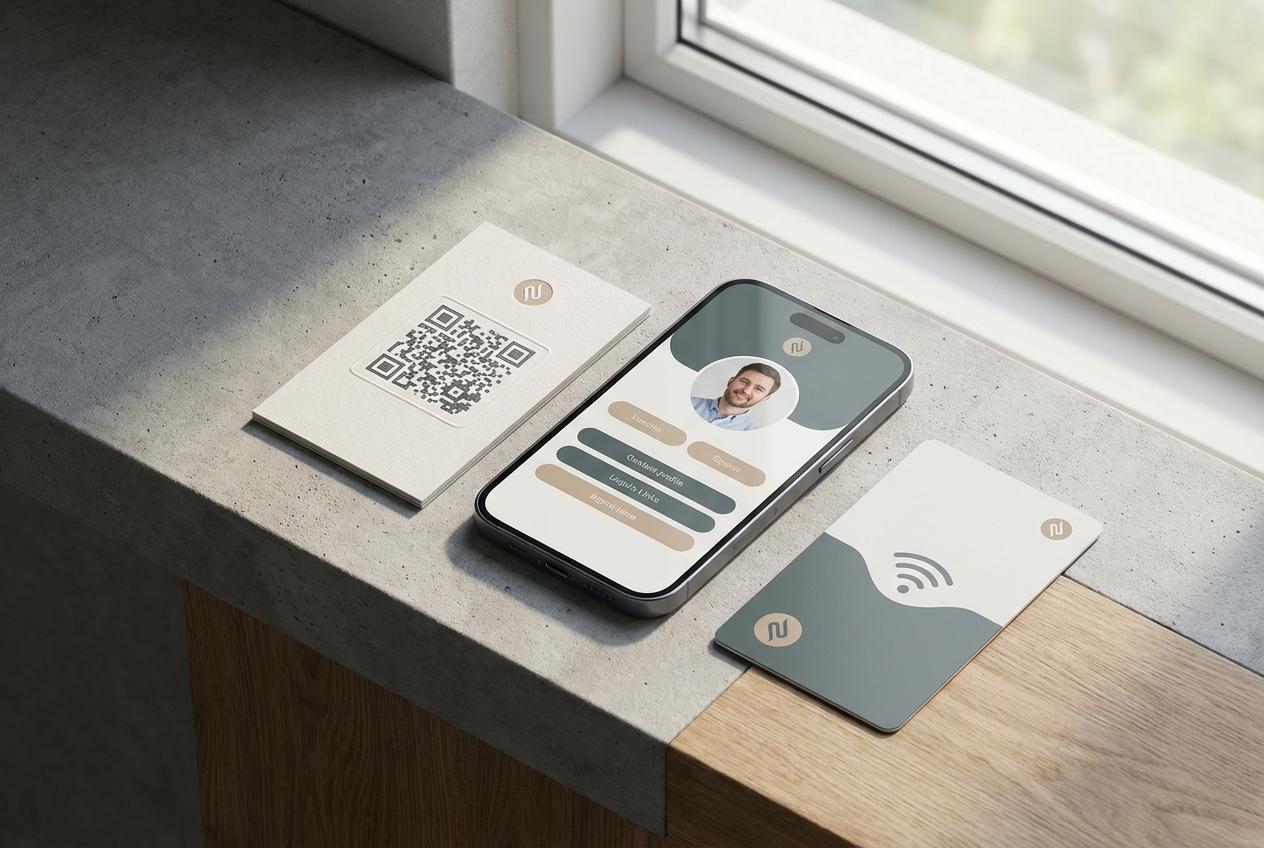
There’s often confusion: QR is treated as one thing, NFC as another, and digital cards as something else entirely.
In reality, the logic is simple:
- A digital business card is the profile (contacts, links, actions)
- QR and NFC are just ways to access it
This is also confirmed in 2026 industry guides.
So the real question isn’t “QR or digital?” but:
“Which access method fits my use case?”
- NFC works well at exhibitions
- QR works better in cafes, clinics, reception areas
- Paper cards with QR work well in personal meetings
This hybrid approach is the most practical solution for many industries.
Comparison by Business Criteria
| Criterion | Paper Business Card | Digital Business Card | Hybrid Format |
|---|---|---|---|
| First impression | Strong offline | Depends on presentation | Strong and convenient |
| Data updates | Requires reprinting | Instant updates | Updated digitally |
| Analytics | Almost none | Available in many services | Partial or full |
| Contact saving speed | Medium | High | High |
| Team scalability | Expensive and inconvenient | Easy | Easy with proper system |
| Suitable for local offline | Yes | Yes | Yes |
| Suitable for events & sales | Limited | Yes | Yes |
This matrix aligns with 2025–2026 industry content:
- Paper excels in tactile experience and personal interaction
- Digital wins in updates, analytics, and control
- Hybrid is consistently described as the best business compromise
What Business Owners Should Choose in 2026
If your business operates locally offline, paper is still relevant. But it shouldn’t exist in isolation. The minimum standard today is a QR code linking to an actual profile or contact page.
If your business grows through meetings, partnerships, sales, conferences, or exhibitions, the digital component becomes essential. Not because it’s trendy — but because contacts without follow-up quickly fade.
In this case, the card should lead somewhere:
- messenger
- form
- booking page
- portfolio
- CRM
If your company operates as a team, the answer is even clearer: you need a system.
This is where tools like Turbologo’s business card builder are useful. It solves a practical problem quickly — helping you create consistent cards based on your brand identity without spending weeks on design. For small businesses and startups, this saves valuable resources.
I rely on a simple formula:
- Paper creates the impression
- Digital continues the interaction
- NFC and QR remove friction
When combined, a business card stops being a souvenir and becomes an entry point into your funnel.
Expert tip:

If after a meeting a person has to manually type your number, search your company, or remember who gave the card — your card is already creating friction. In 2026, a good format eliminates that.
Frequently Asked Questions
Are paper business cards still needed?
Yes. They are useful in offline interactions, service industries, local businesses, and where tactile branding matters. But without a digital layer, their value is limited.
Are digital business cards better than paper?
Not always. For teams, events, sales, and frequent updates — usually yes. For personal interactions, paper still works. For most companies, hybrid is the best solution.
What’s the difference between NFC and a digital business card?
NFC is a transfer method. A digital business card is the profile users access after tapping or scanning.
What matters most in a business card in 2026?
Not just design, but what happens after contact. The card must quickly transfer data, lead to an updated profile, and simplify the next step — message, call, booking, or request.
Final Thought
In 2026, the winner is not the format that looks more modern in photos. The winner is the one that doesn’t lose the connection after a handshake.
Paper still matters. Digital is becoming dominant.
Hybrid gives businesses the best balance between impression, usability, and conversion.